
Language Development in Children: A Guide for Expats | Montessori School Sotogrande

Language development is one of the most fascinating processes in early childhood. From the babbling of the first months to complex conversations by age six, a transformation occurs that few adults fully appreciate. As a Montessori guide, I see every day how a prepared environment and respectful communication naturally accelerate this process. In this article we explore language development children in depth with practical examples.
- Key points for supporting your child’s language
- What your baby understands before speaking
- Stages of language development from 0 to 6 years
- How to stimulate language at home (without expensive resources)
- When to consult a professional
- The role of bilingualism in language development
- Montessori materials that support language development
- Frequently asked questions
- Key takeaways
Key points for supporting your child’s language
- Language development begins in the womb: babies recognize their mother’s voice before birth.
- Between 0 and 3 years, the brain forms linguistic connections at an astonishing rate, but it needs real interaction—not screens.
- In Montessori, we offer an environment rich in sensory vocabulary and concrete experiences that give words meaning.
- Warning signs are not a diagnosis, but it’s wise to consult a professional if your child isn’t babbling by 12 months or not forming simple sentences by age 2.
- Reading aloud, singing, and everyday conversations are the most powerful tools you have at home.

What your baby understands before speaking
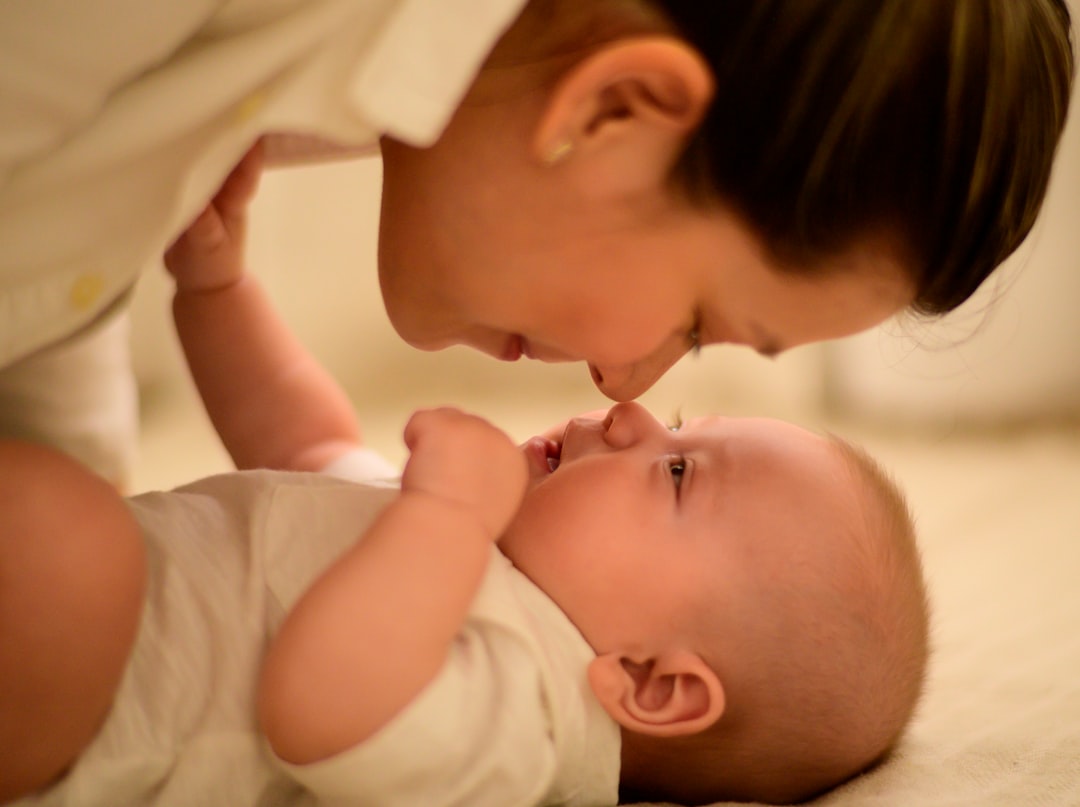
From the seventh month of gestation, a fetus can already distinguish its mother’s voice from other sounds. At birth, newborns prefer human speech over any other auditory stimulus. This isn’t coincidence: the brain is designed to absorb language from the very first contact. When it comes to language development children, it pays to listen to what families and lead guides actually report.
In the Nido (0-3 years) stage at IMS Sotogrande, we observe how babies react to words with body movements, eye contact, and babbles. They don’t “understand” like an adult, but they process phonetic patterns, intonations, and rhythms. That’s why we always speak in short, clear sentences accompanied by gestures: the whole body communicates before the mouth. Daily practice with language development children reveals nuances no handbook fully captures.

Stages of language development from 0 to 6 years
Every child has their own pace, but there are milestones most children reach within similar age ranges. Knowing them helps you support without comparing. Understanding language development children from inside the classroom reshapes everyday decisions.
0 to 12 months: from crying to babbling
Crying is the first intentional communication. Around 3-4 months, cooing (vowel sounds like “aah”, “ooh”) appears. By 6-8 months, canonical babbling (“bababa”, “mamama”) arrives, preparing the oral muscles for real speech. At 12 months, many children say their first meaningful word. If your baby isn’t babbling or making eye contact when hearing voices, consult your pediatrician. Concrete data on language development children is worth reviewing before acting on assumptions.
12 to 24 months: the vocabulary explosion
The child begins naming people, objects, and actions. Between 18 and 24 months, the “lexical explosion” occurs: they can jump from 50 to over 200 words in just a few months. The first two-word combinations appear (“more water”, “daddy come”). This is the time to offer concrete, real vocabulary, avoiding “baby talk”.
2 to 3 years: sentences and emerging grammar
Sentences get longer, and the first articles, prepositions, and verb conjugations appear. Children make grammatical errors because they’re deducing rules: “me no want” or “daddy’s feet” are signs the brain is processing structures, not just repeating. At this stage, language connects with thought: children begin expressing desires, memories, and even fantasies.
3 to 6 years: narratives and conversation
In Casa de Niños (3-6 years), language development accelerates with socialization. Children tell stories, ask constant questions (“why is the sky blue?”), explain game rules, and defend their point of view. Vocabulary can exceed 2,000 words. Here, the Montessori environment provides concrete materials that give body to abstract concepts: the pink tower isn’t just a block—it’s “big”, “bigger”, “the biggest of all”.

How to stimulate language at home (without expensive resources)
You don’t need apps or electronic toys. The most effective tools are free and part of your daily routine.
- Talk with your child, not at them. Describe what you’re doing while cooking, walking, or getting dressed. “I’m going to cut the carrots—they’re orange and crunchy” is better than “look, vegetables”.
- Read aloud every day , even if it’s a short story. Point to the pictures, pause so they can complete the phrase. It doesn’t matter if they repeat the same book 20 times: repetition consolidates vocabulary.
- Sing songs and play with rhymes. The musicality of language is trained through the ear, and children love phonetic games.
- Wait. When your child tries to say something, don’t complete their sentence. Give them 5-10 seconds: the brain needs time to organize words.
- Avoid direct correction. If they say “me want water”, respond with the correct model: “You want water. Here you go.” Don’t repeat their error or point it out.
At IMS Sotogrande, these strategies are part of the daily classroom routine. Guides speak in a low, clear voice, offer precise vocabulary (“it’s a fine rain”, not “look, it’s raining”) and respect the child’s silences. The result: children who at age 4 explain complex processes with astonishing clarity.
Would you like to see how we do it in the classroom? Book a personalized school visit and discover the prepared environment that supports your child’s language development.
When to consult a professional
There’s no exact age to “worry”, but there are indicators worth monitoring. The American Academy of Pediatrics recommends consulting if by 12 months the baby isn’t babbling or using gestures (pointing, waving bye-bye). At 18 months, if they’re not saying at least 6 meaningful words. At 24 months, if they’re not forming two-word combinations. And at 3 years, if a close family member can’t understand at least 75% of what they say.
These signs don’t imply a diagnosis, but they do warrant an early evaluation. The sooner a difficulty is detected, the more effective the intervention. At IMS, we have the Rainbow Classroom, specialized in diversity support, where we work in coordination with speech therapists and families.
The role of bilingualism in language development
A common belief is that two languages “confuse” the child. Scientific evidence proves the opposite. According to the Spanish Montessori Association, bilingual children develop greater cognitive flexibility, better attention skills, and a deeper understanding of language structures.
At IMS Sotogrande, bilingualism is part of our identity. From Nido, children are immersed in Spanish and English, and in Casa de Niños, French is introduced. It’s not about “teaching languages” as a subject, but living them naturally: one guide speaks Spanish, another English, and the child absorbs both codes with the same ease they absorb sunshine.
If your family has relocated to the Costa del Sol or Campo de Gibraltar and you want your child to maintain their mother tongue while learning Spanish, the bilingual Montessori environment offers exactly that: respect for the native language and a natural openness to the new one.
Montessori materials that support language development
In the Montessori classroom, language isn’t taught abstractly. Each material has a clear communicative purpose.
- Objects and images (0-3): the adult names a real object, then an image. The child associates sound and meaning concretely.
- The three-period lesson (3-6): “this is…”, “where is…”, “what is…”. A recognition game that consolidates active vocabulary.
- Sandpaper letters and the movable alphabet : touch joins sight and hearing. The child touches the letter, says its sound, writes it in sand. This connects phoneme and grapheme before conventional reading.
- Sorting boxes and collections : grouping objects by categories (animals, fruits, means of transport) enriches thematic vocabulary and association skills.
These materials are present in our IMS Sotogrande classrooms, adapted to each plane of development. If you’d like to see them in action, a school visit is the best way to understand how the prepared environment supports language development holistically.
Frequently asked questions
Is it normal for my 2-year-old not to talk yet?
Every child has their own pace, and some take longer to produce their first words without any underlying issue. However, if by 24 months they aren’t saying at least 50 words or forming two-word combinations, it’s wise to consult with a pediatrician or speech therapist. Early detection makes a real difference in outcomes.
Do screens delay language development?
Yes. Studies published by the American Academy of Pediatrics show that excessive screen time before age 3 is associated with smaller vocabulary and poorer oral comprehension. The brain learns language from real people who respond to its cues: a screen doesn’t wait, repeat, or adapt its message. Human contact is irreplaceable.
When should I start reading to my baby?
From birth. The point isn’t for them to understand the text, but to hear your voice, the rhythm of sentences, and intonation. Cloth or board books with high-contrast images are ideal for the first months. From age one, books with flaps, textures, and object names encourage interaction and early vocabulary.
Can bilingualism cause a language delay?
No. Bilingual children may take a bit longer to differentiate between the two languages, but their total vocabulary (the sum of both languages) is usually equal to or greater than that of a monolingual child. What may appear as a “delay” is actually a more complex process: the brain is managing two grammatical systems at once. With time and balanced exposure, both languages solidify.
What if my child mixes words from two languages?
This is completely normal and is called “code-switching”. It doesn’t mean confusion; it means the child is accessing their full repertoire to communicate. As their command of each language grows, mixing decreases naturally. At IMS Sotogrande, guides model each language clearly and separately, respecting this process.
Key takeaways
Language development isn’t a race or a checklist of milestones your child must hit rigidly. It’s an organic process that flourishes when the child feels safe, heard, and surrounded by real communication. The most powerful tools cost nothing: your voice, your time, and your mindful attention.
If you’d like to see firsthand how a prepared Montessori environment enhances children’s communicative development, book a visit to IMS Sotogrande. We’re in Sotomarket, just minutes from La Línea, Algeciras, Estepona, and the entire Costa del Sol.









