
Montessori Practical Life Activities: How They Build Your Child’s Skills | IMS Sotogrande
In short
If you’ve visited a Montessori classroom or read about the pedagogy, you’ve likely heard about practical life activities. They are the most visible block of the Children’s House (ages 3-6) stage, yet many parents wonder why we spend so much time pouring water, transferring chickpeas, or buttoning zippers. The short answer: because each of these tasks builds the child’s mind.

If you’ve visited a Montessori classroom or read about the pedagogy, you’ve likely heard about practical life activities . They are the most visible block of the Children’s House (ages 3-6) stage, yet many parents wonder why we spend so much time pouring water, transferring chickpeas, or buttoning zippers. The short answer: because each of these tasks builds the child’s mind. In this article we explore Montessori practical life activities in depth with practical examples.
Key takeaways When it comes to Montessori practical life activities, it pays to listen to what families and lead guides actually report.
- Practical life activities develop fine motor skills, concentration, and inner order.
- They are organized into four groups: care of self, care of the environment, grace and courtesy, and control of movement.
- You don’t need to buy expensive materials: with household objects, you can create authentic exercises.
- Error is controlled by the material, not the adult, which reinforces self-esteem.
- At IMS Sotogrande, these activities are part of the daily curriculum from Nido (0-3) through Taller (6-12).
- Why Montessori practical life activities are the foundation for everything else
- The four groups of practical life activities in Montessori
- How to adapt practical life activities at home for expat families
- Common mistakes adults make with Montessori practical life
- From practical life to deep concentration in Montessori education
- Frequently Asked Questions about Montessori Practical Life
- Key Takeaways
Why Montessori practical life activities are the foundation for everything else
Maria Montessori observed that young children want to do what they see adults doing. They don’t want toys that imitate: they want real, size-adapted tools and an environment where they can repeat without anyone telling them ‘that’s not right.’ Practical life activities address this biological need. Daily practice with Montessori practical life activities reveals nuances no handbook fully captures.
When a three-year-old pours water from one jug to another, they are training hand-eye coordination, finger strength, and the ability to focus on a single goal. But they are doing something more: they are building the mental image of ‘I can.’ This experience, repeated dozens of times over the three-year cycle, is the foundation of intrinsic motivation that later transfers to reading, math, or problem-solving. Understanding Montessori practical life activities from inside the classroom reshapes everyday decisions.
The Asociación Montessori de España puts it this way: ‘practical life is the bridge between home and school because the child works with real objects in a context they understand.’ There is no abstraction, no worksheet: there is direct action with visible consequences.

The four groups of practical life activities in Montessori
In the Montessori classroom, practical life activities are classified into four areas. Understanding them will help you identify what your child needs at each moment and how to enrich their environment at home.
Care of Self
These include hand washing, combing hair, buttoning, tying shoelaces, or putting on shoes. Each exercise is designed so the child can do it independently. At IMS, we work with real materials: glass jugs, wooden combs, small fabric buttons that are fastened and unfastened repeatedly until the hand memorizes the gesture.
Care of the Environment
Sweeping, mopping tables, watering plants, cleaning windows, transferring food with a spoon or tongs. These activities connect the child to their space and teach them that their contribution has value. A child who waters the classroom plant each morning is not only developing motor skills: they are taking responsibility.
Grace and Courtesy
Greeting, saying please, waiting for a turn, introducing oneself to a guest. In an international classroom like the one at IMS Sotogrande, where families from over fifteen nationalities live together, these activities take on a special dimension: the child practices courtesy in Spanish, English, and German, and discovers that rules of respect are universal.
Control of Movement
Walking on a line, carrying trays, pouring liquids, threading needles, opening and closing jars. The goal is for the child to master their body with precision. The classroom line, for example, may look like a game, but it trains the balance, posture, and silent concentration needed later for any academic work.
Book a personalized school visit and observe these activities live during a morning in Children’s House.

How to adapt practical life activities at home for expat families
You don’t need a fully equipped classroom. Children aged 2 to 6 want to participate in what you’re doing, and the kitchen, living room, or bathroom are perfect laboratories. Here are concrete ideas to start today:
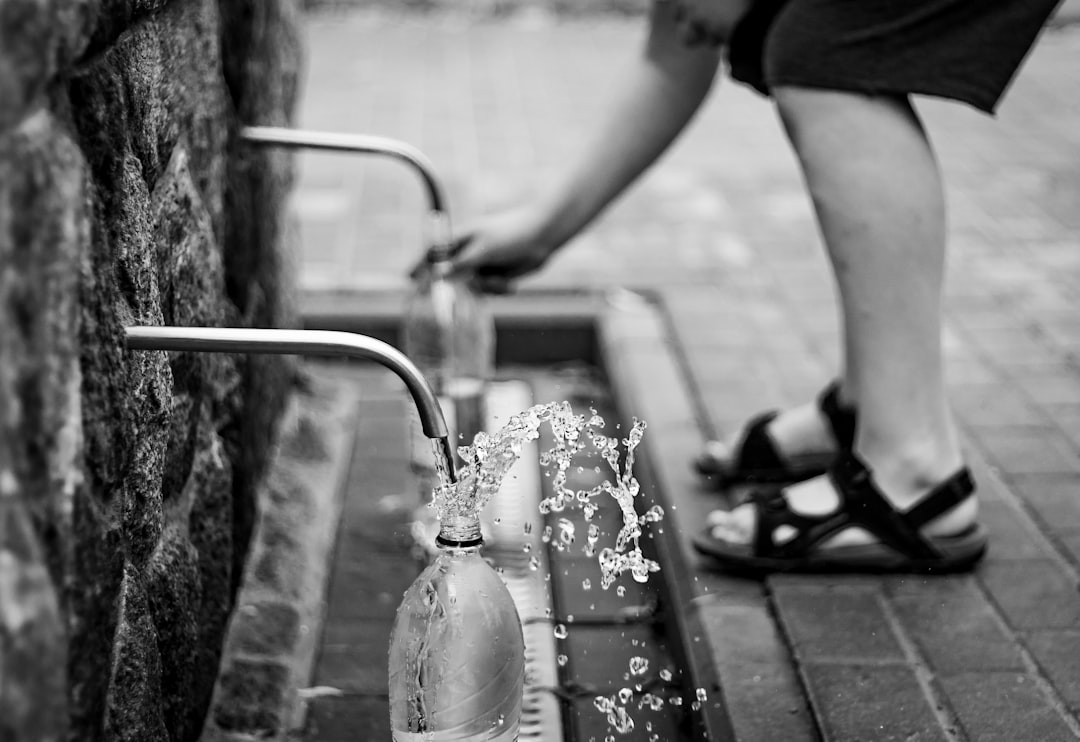
- Pouring water: Place two small glass jugs on a tray and ask them to transfer water from one to the other. Start with colored water so they can see the level. Once they master it, add a funnel.
- Transferring with tongs: Place chickpeas or marbles in a bowl and offer a pair of kitchen tongs to transfer them to another container. This works the three-finger pincer grasp used later to hold a pencil.
- Table cleaning: Give them a small sponge and a container with soapy water. Teach them to scrub in a circular motion and dry with a cloth. The result is immediate: the table is clean.
- Plant care: Assign a small plant on the terrace. A spray bottle is easier than a watering can for the youngest children.
- Dressing independently: Place a board with zippers, large buttons, and laces on a low coat rack. Practice without the pressure of rushing to school.
The important thing is that each activity has a clear beginning (taking the tray), a development (the task), and an end (leaving everything ready for the next person). This three-part sequence is what structures the child’s thinking.

Common mistakes adults make with Montessori practical life
The most frequent one is interrupting. If your child is pouring water and a little spills, breathe and let them clean it up. The error is part of the Montessori material: the water that spills tells them, without words, that they need to go slower. If you intervene with ‘careful, it’s spilling,’ you remove the opportunity for them to learn on their own.
Another common mistake is offering activities that are too difficult or too easy. Observe: if your child repeats a task three or four times in a row happily, they are in their development zone. If they abandon it quickly or become frustrated, it’s probably too advanced. The AMI (Association Montessori Internationale) insists that the adult prepares the environment and observes, not directs.
From practical life to deep concentration in Montessori education
Perhaps the most surprising thing is that these apparently simple activities prepare the child for the long periods of concentration that characterize Montessori education. A four-year-old who has worked with practical life activities for two years arrives at Taller (ages 6-12) with an attention capacity many adults would envy.
At IMS, we have seen six-year-old children choose to work with geometry material for forty-five minutes straight. That concentration doesn’t appear out of thin air: it’s built brick by brick with each jug poured, each table mopped, each shoelace tied.
If your family lives in the Campo de Gibraltar, the Costa del Sol, or even in Gibraltar and you’re looking for a school where these activities are part of everyday life, we are in Sotogrande, just twenty minutes from La Línea and Algeciras. Visit us and see for yourself how it works.
Frequently Asked Questions about Montessori Practical Life
At what age do practical life activities start in Montessori?
From the moment a child walks securely, around 12-15 months, they can begin with simple exercises like carrying small objects or placing shoes in their spot. In the IMS Nido (0-3 years), we already work with adapted trays, tiny jugs, and cleaning cloths sized for them. The key is to respect their rhythm and offer real materials, not toys.
Do I need to buy special Montessori materials?
No. The most valuable practical life activities are done with everyday objects: glass jugs, wooden spoons, sponges, kitchen tongs, wooden trays. The important thing is that they are real-sized (not miniature toys) and that the child uses them for an authentic purpose. If you want guidance, at IMS we offer ‘Acompañando-té’ workshops where we explain how to prepare the home.
Will my child get bored repeating the same thing?
On the contrary. Repetition is the natural mechanism of child learning. When a child pours water twenty times in a row, they are not bored: they are consolidating a motor skill and experiencing the satisfaction of mastering it. When the task becomes automatic, the child leaves it and seeks the next challenge. Trust their work cycle. They know when they are ready.
Are practical life activities useful for children over 6 years old?
Yes, although they change form. In Taller (ages 6-12), practical life activities evolve towards more complex environment care projects: cooking complete recipes, repairing objects, organizing events for the school community, managing a garden. The principle is the same: real work, with real tools, with real consequences.
Key Takeaways
Practical life activities are not household chores disguised as play. They are the quintessential Montessori mechanism for building autonomy, concentration, and confidence in children from 0 to 6 years, and they transform into meaningful projects during the Taller stage. If you want your child to grow up feeling capable, start by offering them a jug, a sponge, and your trust.
The next step is simple: observe what your child wants to do at home, prepare a space at their height, and let them try. If you need support, book a school visit and discover how our guides support this process every day in the classroom.
Signed: Viviane Dumont, Director of Studies at IMS Sotogrande.









