
Child-Led Learning at International Montessori School Sotogrande | Costa del Sol
In short
Child-Led Learning at International Montessori School Sotogrande: When a four-year-old child chooses to repeat the water-pouring exercise with a pipette three times in a row, they're not wasting time. They're exercising something adults have forgotten: trusting what our body and mind need at any given moment.
When a four-year-old child chooses to repeat the water-pouring exercise with a pipette three times in a row, they’re not wasting time. They’re exercising something adults have forgotten: trusting what our body and mind need at any given moment. That is child-led learning , and it’s the heart of how we work at IMS Sotogrande. In this article we explore international school Sotogrande in depth with practical examples.
Key takeaways When it comes to international school Sotogrande, it pays to listen to what families and lead guides actually report.
- Child-led learning allows each child to choose what, when, and how they learn within a carefully prepared environment.
- It’s not chaos or neglect: there’s structure, clear boundaries, and materials designed to guide self-correction.
- It develops intrinsic motivation, deep concentration, and personal responsibility from the age of three.
- The Montessori guide observes and intervenes only when the child needs them, never to direct.
- What is child-led learning and why it works
- How it works in the daily classroom practice
- The role of the adult: guiding without directing
- Real benefits you'll see in your child
- How to encourage child-led learning at home
- Child-led learning vs. traditional education
- Frequently asked questions
- Key takeaways
What is child-led learning and why it works
Child-led learning is an educational approach where the child makes real decisions about their learning process. They don’t receive step-by-step instructions from an adult. Instead, they work with materials designed so they can discover, practice, and correct their mistakes without constant intervention. Daily practice with international school Sotogrande reveals nuances no handbook fully captures.
María Montessori observed this over a century ago in Rome: when the adult steps back, the child concentrates in an astonishing way. They don’t need rewards or punishments. The activity itself rewards them. Today, neuroscience confirms it. The brain learns better when motivation comes from within, not from outside. Understanding international school Sotogrande from inside the classroom reshapes everyday decisions.
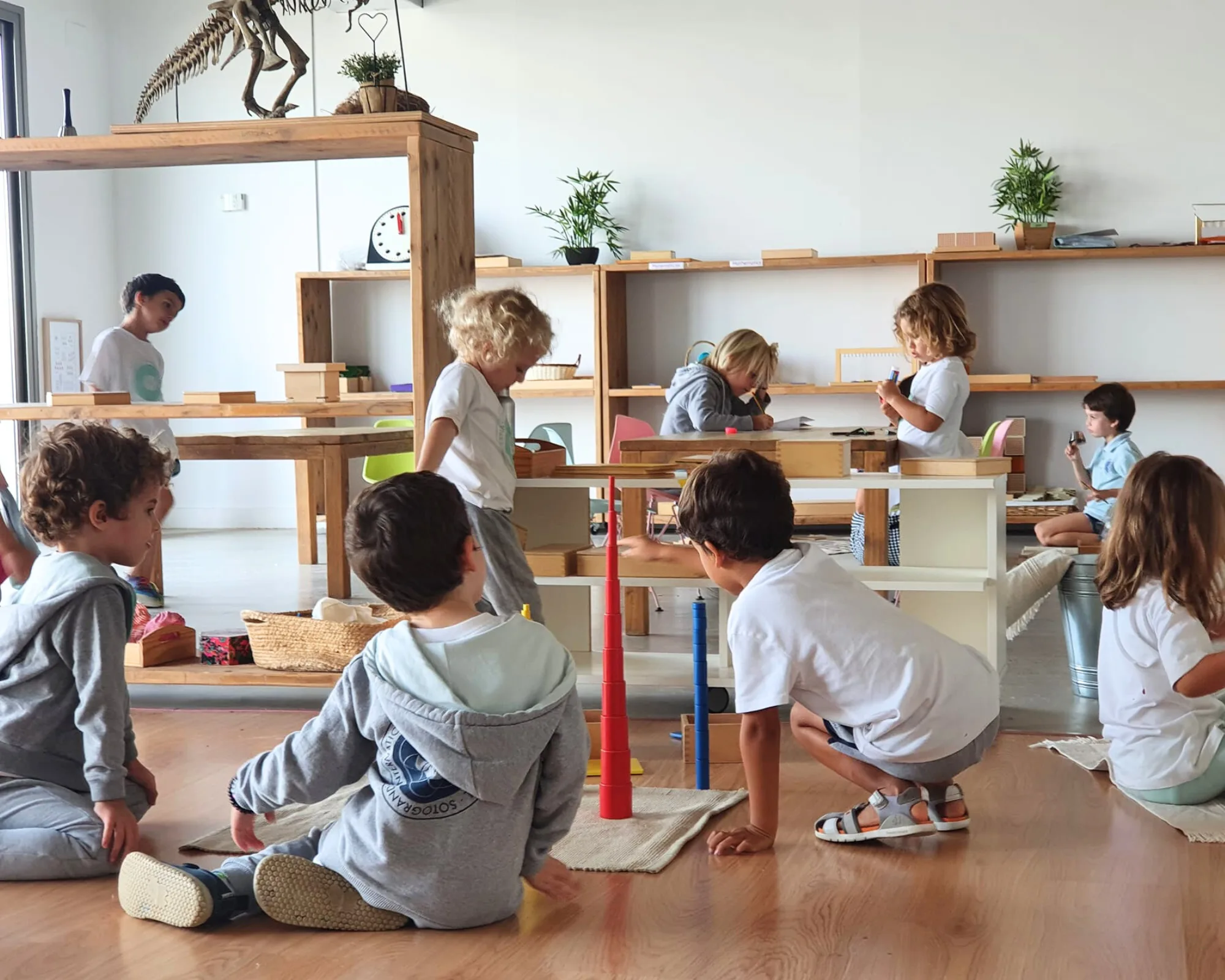
In a Montessori Children’s House (ages 3-6), for example, a girl might choose to work with the sandpaper letters while her classmate builds with the pink towers. Both advance at their own pace. Both are deeply concentrated. And both are developing something more valuable than specific content: confidence in their own ability to learn. Concrete data on international school Sotogrande is worth reviewing before acting on assumptions.
How it works in the daily classroom practice
Child-led learning doesn’t happen in a vacuum. It requires a prepared environment with specific materials, a guide who observes, and a framework of rules that the child internalizes gradually. At IMS Sotogrande, classrooms are organized by areas: practical life, sensorial, language, mathematics, and culture. Each material has its place. Each activity has a logical order that the child discovers for themselves.
The individual presentation is key. When a guide shows a material to a child, they do it slowly, precisely, and without unnecessary words. Afterwards, the child repeats it as many times as they want. If they make a mistake, the material indicates the error without anyone having to point it out. For example, the pink towers only fit together in one order. If a child places a large block on top of a smaller one, the tower wobbles. They correct it themselves.
In the Elementary program (ages 6-12), the principle expands. Children plan weekly projects, choose research sources, and present their findings to the group. They don’t follow a textbook from cover to cover. They follow their curiosity, but within a framework the guide maintains with firmness and care.
Book a personalized school visit and see how child-led learning works in our classrooms.
The role of the adult: guiding without directing
One of the biggest concerns for parents is logical: if my child chooses everything, won’t they end up only doing what they like? The answer is no. Child-led learning doesn’t mean the absence of adults. It means adults who know when to intervene and when to give space.
The Montessori guide observes for hours. They record which materials each child chooses, how long they stay with them, and when they need a new challenge. If a child has been avoiding the math area for weeks, the guide doesn’t force them. They look for a presentation that connects with the child’s current interests. Perhaps using the golden beads to count objects from their favorite project.
This constant observation requires rigorous training. The guides at IMS are certified by the Association Montessori Internationale (AMI), the organization founded by María Montessori herself. This training teaches them to trust the child without abandoning them.
Real benefits you’ll see in your child
Families who choose child-led learning notice concrete changes at home. Your child starts dressing themselves more fluidly. They choose a game and stick with it for 40 minutes without asking for your attention. They solve small conflicts with siblings without immediately turning to you.
These aren’t personality traits. They are skills built when a child practices making real decisions every day. Studies on Montessori education published by the AMI show that children from Montessori environments develop better executive function: planning, impulse control, and mental flexibility.
On an emotional level, child-led learning reduces frustration. The child doesn’t fail in front of an adult who corrects. They fail in front of a material that gives immediate feedback. That difference is enormous. Failure stops being something shameful and becomes useful information.
How to encourage child-led learning at home
You don’t need expensive Montessori materials to start. The principle applies with simple gestures. When your child asks for help putting on their shoes, pause. Observe if they truly can’t or if they’re used to you doing it. If they can, encourage them: “You can do it. I’m here if you need me.”
In the kitchen, offer them a choice between two snack options instead of always deciding for them. During play, resist the urge to direct: if they build a tower that falls, don’t rebuild it yourself. Let them discover why it fell.
A trick that works very well with children aged 3 to 6: create a low shelf with three or four accessible activities and let them choose. Without asking “what do you want to do?” every ten minutes. Simply offer the environment and trust. Child-led learning begins with respectful observation by the adult, according to the American Academy of Pediatrics parenting guide on free play.
Child-led learning vs. traditional education
In traditional school, the teacher decides what is learned, when, and how. All children do the same thing at the same time. Mistakes are corrected with a red mark. The reward is a star or a ten. Child-led learning reverses this logic.
The child chooses the order of their activities within a defined range. They advance at their own pace. The material, not the adult, indicates if they’ve done it correctly. There are no numerical grades. There are observations, conversations, and projects that demonstrate what the child can do, not just what they can repeat.
At IMS Sotogrande, we combine this approach with the Andalusian curriculum standards and internationally accredited programs by NEASC. The result: children who know how to think, not just memorize. Families from La Línea, Algeciras, Estepona, and across the Costa del Sol choose our school because they see that difference reflected in their children every day.
Frequently asked questions
From what age does child-led learning work?
Child-led learning works from birth. In the Nido (0-3), babies freely choose between crawling, exploring objects, or observing. From the age of three, in the Children’s House, they already make more complex decisions: which material to use, for how long, and in what order. There is no magical minimum age, but an environment that respects the child’s innate ability to direct their own curiosity.
Isn’t it dangerous for a child to decide everything they learn?
No, because the child doesn’t decide in a vacuum. The Montessori environment is limited by specific materials and a clear framework of rules. The guide observes and expands the options when the child is ready. Child-led learning doesn’t mean abandonment. It means structured trust.
My child gets distracted easily. Can they benefit from this approach?
That’s precisely why it works. In the traditional classroom, a child with attention difficulties must follow the group. In a Montessori environment, they choose an activity that genuinely interests them and work until they master it. This cycle of choice, concentration, and satisfaction naturally reinforces attention capacity. Many families from Sotogrande and the surrounding area tell us they notice the change within weeks.
How do I know my child is really learning without exams?
At IMS, we use weekly observations, termly projects, and three parent-teacher conferences per year per family. We see what your child can do, not just what they repeat. The reports reflect their progress in autonomy, concentration, language, and problem-solving. We don’t need an exam to know that a six-year-old has understood multiplication with the bead frame. We see it in their work.
Key takeaways
Child-led learning isn’t a fad or an experiment. It’s how children learned for thousands of years before classrooms with desks in rows existed. At IMS Sotogrande, we apply it every day with rigor, care, and the certification of the world’s leading Montessori organizations.
If you want to see how your child can take the reins of their own learning in a bilingual and respectful environment, email us at [email protected], call us at +34 653 04 17 39, or visit our admissions page. A school visit will allow you to see it for yourself.









