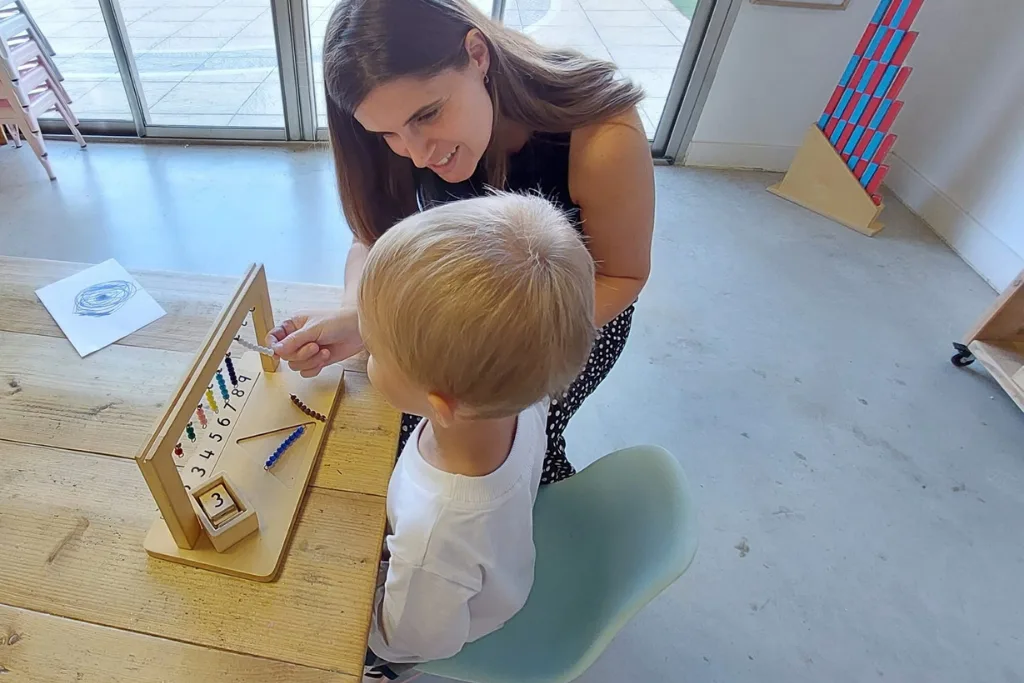
Low Student-Teacher Ratios: The Secret to Personalised Montessori Learning
If you’re comparing schools for your child, you’ve probably looked at facilities, languages, or fees. But there’s one crucial factor many parents overlook that directly impacts your child’s daily experience: Montessori student-teacher ratios —the number of children per adult in the classroom.
Montessori ratios aren’t a luxury or a marketing gimmick. They are a necessary condition for the pedagogy to work. Without them, the individualised tracking that defines the method disappears. When it comes to Montessori student-teacher ratio, it pays to listen to what families and lead guides actually report.
- The ideal ratio in Montessori varies by stage: lower in Nido (0-3) and slightly higher in Taller (6-12).
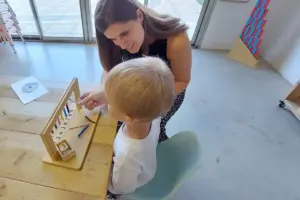
- A low ratio allows the guide to observe, guide, and respect each child’s unique pace.
- Children in small groups develop better autonomy, concentration, and social skills.
- A low ratio isn’t just a legal requirement; in Montessori, it’s a pedagogical philosophy.
- What Exactly Are Montessori Student-Teacher Ratios and Why Do They Matter?
- Montessori Ratios by Stage: From Nido to Taller
- What Are the Benefits of a Low Student-Teacher Ratio for Your Child?
- Montessori Ratios vs. Traditional Education Ratios
- Low Ratios, But at What Cost?
- Frequently Asked Questions
- Key Takeaways
What Exactly Are Montessori Student-Teacher Ratios and Why Do They Matter?
Montessori ratios refer to the proportion between the number of children and the number of adults (guides and assistants) present in the classroom. In Montessori pedagogy, this isn’t just a bureaucratic number—it’s the foundation of genuine, personalised support.
Maria Montessori designed her classrooms so that each child could advance at their own pace. This is only possible if the guide has the time and space to observe, present materials individually, and detect sensitive periods. With overly large groups, that individual focus is lost.
According to the Association Montessori Internationale (AMI), classrooms must ensure each child receives enough attention to develop their potential. Low ratios aren’t a luxury; they are a core pedagogical tool.
Montessori Ratios by Stage: From Nido to Taller
Supporting a 10-month-old baby is very different from guiding a 9-year-old researching the solar system. That’s why Montessori ratios change according to the developmental stage.
Nido (0-3 Years): The Lowest Ratio
In the Nido stage, babies and toddlers need almost constant attention. Ratios are typically 1 adult for every 3-5 children. This allows for respectful nappy changes, support during crawling, immediate response to crying, and the creation of secure bonds with the primary caregiver.
Casa de Niños (3-6 Years): The Perfect Balance
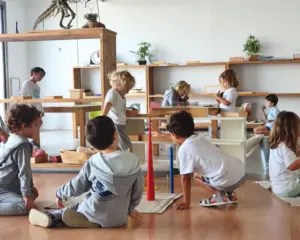
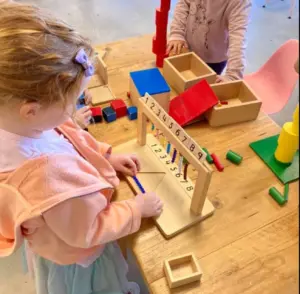
In Casa de Niños, ratios are around 1 adult for every 8-10 children. Children at this age have more autonomy but still need individual presentations of materials. The guide observes who is ready for a new challenge and who needs to repeat. Without a low ratio, this observation becomes impossible.
Taller (6-12 Years): Wider Ratios, But Carefully Watched
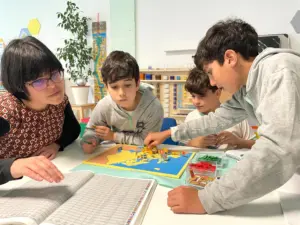
In Taller, Montessori ratios can be slightly higher (1 adult for every 10-15 children) because children work more independently. However, the guide’s presence remains key for great lessons, group projects, and conflict resolution. Assistants complement the ratio to maintain personalised attention.
At IMS Sotogrande, these ratios are respected at every stage, from Nido to Taller. It’s one of the reasons families from La Línea, Algeciras, or Gibraltar choose us: they know their child won’t be just another face in the class.
Book a personalised school visit to see for yourself.
What Are the Benefits of a Low Student-Teacher Ratio for Your Child?
Montessori ratios don’t just benefit the guide. They directly benefit each child. Here are the advantages observed in small groups:
- Emotional Security : The child knows their primary adult and feels supported.
- Respect for Individual Pace : No waiting for 25 classmates to receive a presentation.
- Better Conflict Management : The guide can mediate immediately and calmly.
- Greater Concentration : Less noise, fewer interruptions, deeper work.
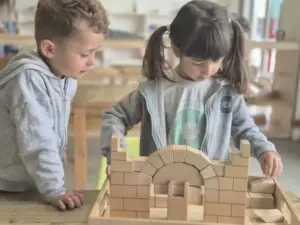
- Development of Autonomy : The child has real space to choose, make mistakes, and learn.
A study published by the American Academy of Pediatrics confirms that small groups in early childhood improve cognitive and socio-emotional development. It’s not Montessori magic; it’s applied science.
Montessori Ratios vs. Traditional Education Ratios
In Spain, legislation sets maximum ratios by law: 20 children per classroom in Infant Education (0-3) and 25 in Primary Education. Many public and state-subsidised private schools work right at that limit. At best, there’s one teacher and one infant education technician.
In Montessori, the ratio isn’t a legal limit; it’s a pedagogical decision. A Montessori classroom with 25 children has at least 2 adult guides, not because it’s required by law, but because the method demands it. The difference is subtle but profound.
Additionally, in a Montessori classroom, children are grouped in 3-year age spans (0-3, 3-6, 6-12), which allows older children to help younger ones and each child to work at their actual level, not the one marked by the school calendar. Low ratios make this actually work.
Low Ratios, But at What Cost?
That’s an honest question. Maintaining low Montessori ratios means hiring more qualified staff, and that has a cost. Families who choose a Montessori school know this: the investment is higher than at a conventional school.
But the return is too. A child who receives real attention, who feels seen and heard, develops a confidence that isn’t measured in exams. It’s measured in how they relate to others, solve problems, and face new challenges.
At IMS, fees are adapted to different schedules and programmes. You can find all the updated information on our admissions page or write to us at [email protected]. We don’t publish generic figures because every family has different needs.
Frequently Asked Questions
What is the ideal student-teacher ratio in a Montessori school?
The ideal ratio depends on the stage. In Nido (0-3 years), 1 adult for every 3-5 children is recommended. In Casa de Niños (3-6 years), 1 for every 8-10. In Taller (6-12 years), 1 for every 10-15. AMI doesn’t set an exact number but requires that the guide can provide individualised tracking for each child.
Are Montessori student-teacher ratios regulated by law in Spain?
There is no specific regulation for Montessori ratios. Montessori schools must comply with the general regulations of the Junta de Andalucía (or the corresponding autonomous community), but many operate with lower ratios as part of their pedagogical philosophy. At IMS Sotogrande, our ratios are below the legal maximum.
Why does a low student-teacher ratio improve learning?
Because it allows the guide to observe, present materials individually, and respect each child’s pace. In large groups, teachers tend to teach to the middle, leaving behind those who need more time and boring those who advance faster. With low ratios, each child progresses when they are ready.
Do Montessori ratios influence children’s behaviour?
Yes. Studies on small groups in early childhood show fewer conflicts, better emotional management, and greater concentration. When the adult can intervene immediately and respectfully, children learn to resolve their own disputes. This doesn’t happen in overcrowded classrooms.
Key Takeaways
Montessori student-teacher ratios aren’t just another number on a school brochure. They are the condition that makes genuine, personalised support possible, respects individual pace, and fosters the autonomy that defines the method. If you’re looking for an environment where your child isn’t one among thirty, it’s worth asking about ratios before choosing a school.
At IMS Sotogrande, each classroom has the necessary number of adults so your child feels seen and supported. Visit us or call us at +34 653 04 17 39 to learn about our ratios first-hand.
Viviane Dumont, Director of Studies at IMS Sotogrande.