Montessori Observation: How a Guide Transforms the Way You Understand Your Child
Montessori observation is the invisible pillar of the pedagogy. Without it, a guide (or a parent) becomes an adult who talks, intervenes, and directs. With it, you learn to read what the child truly needs, not what the adult assumes they need.
Key Points
- Montessori observation is an active technique, not passive: it has rules, a specific physical posture, and a clear goal.
- AMI-trained guides use it daily to prepare the environment and present materials at the right moment.
- At home, you can apply simplified versions to understand tantrums, preferences, and sensitive periods.
- Observing without intervening is the hardest part and the one that most transforms your relationship with your child.
What Exactly is Montessori Observation?
Montessori observation is a systematic method that allows the adult to gather objective information about the child without altering their behavior. It’s not intuition, it’s not a quick glance. It’s a trained process.
Maria Montessori developed this technique in her Children’s Houses in the early 20th century. AMI training includes hundreds of hours of observation practice, because without it the Montessori materials lose all their meaning. The guide doesn’t “teach” in the traditional sense: they observe, prepare the environment, and only when the child shows a clear need, present the appropriate material.
In simple terms: the adult stops being the protagonist and becomes a scientist studying their child or student with respect and without judgment.
How it’s Practiced in a Real Montessori Classroom
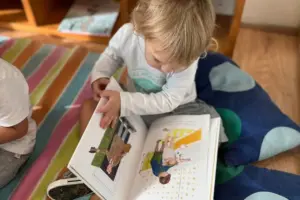
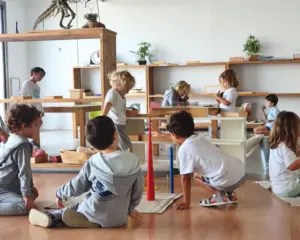
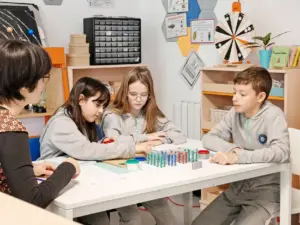
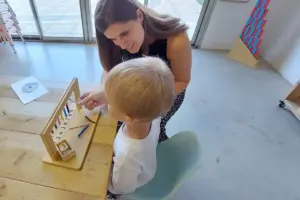
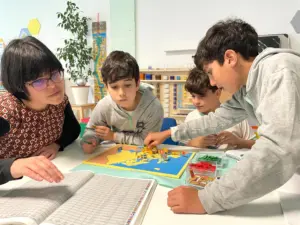
At IMS, our guides dedicate structured time to observing each day. They don’t do it while correcting notebooks or talking to other adults. They sit on a low chair, at a visible but non-intrusive distance, with a notebook or tablet.
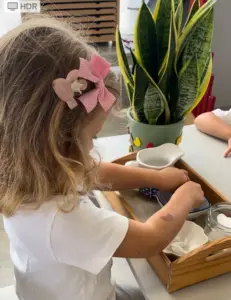
They record concrete data: which material the child chooses, how long they stay with it, if they repeat it, if they ask for help, how they move around the classroom, with whom they interact. This record allows identifying sensitive periods (the moment when the child shows an intense attraction to classifying, for example) and adapting the environment.
Montessori observation isn’t spying on the child. The child knows the guide is there. But the relationship is different from a teacher who watches: the guide looks to understand, not to correct.
Book a personalized school visit to see how our guides work in silence while children choose their activity.
The Three Moments of a Montessori Observation
Every Montessori observation process follows three phases. Families who understand this scheme begin to apply it at home naturally.
1. Observer Preparation
Before observing, the adult calms down. They breathe. They leave their expectations at the door. They don’t enter with the idea of “seeing if my child does X.” They enter with the intention of discovering what they are really doing.
In a Montessori classroom, the guide adopts a specific physical posture: seated, at the child’s eye level, with still hands. They don’t cross their arms (a sign of judgment). They don’t lean forward (a sign of wanting to intervene). They are present, but not active.
2. Objective Recording
Note what you see, not what you feel. “He took the red cylinder and fitted it three times” is an objective record. “He was distracted and didn’t know what to do” is an interpretation.
AMI guides use standardized formats, but at home a simple notebook is enough. Write down the time, the action, and the duration. In a few days you’ll start to see patterns that were previously invisible.
3. Analysis and Response
After observing, the adult asks themselves: what does this tell me about what my child needs? A child who repeats a material fifteen times in a row isn’t “obsessed”: they are consolidating a learning. A child who rejects a material may be indicating they aren’t ready or that the material doesn’t offer the right challenge.
The response isn’t “I must do something.” Sometimes, the response is to change the environment: offer a new material, remove one that no longer interests, or simply wait.
What Montessori Guides Observe at IMS
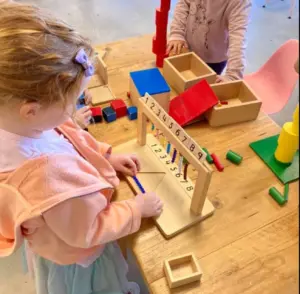
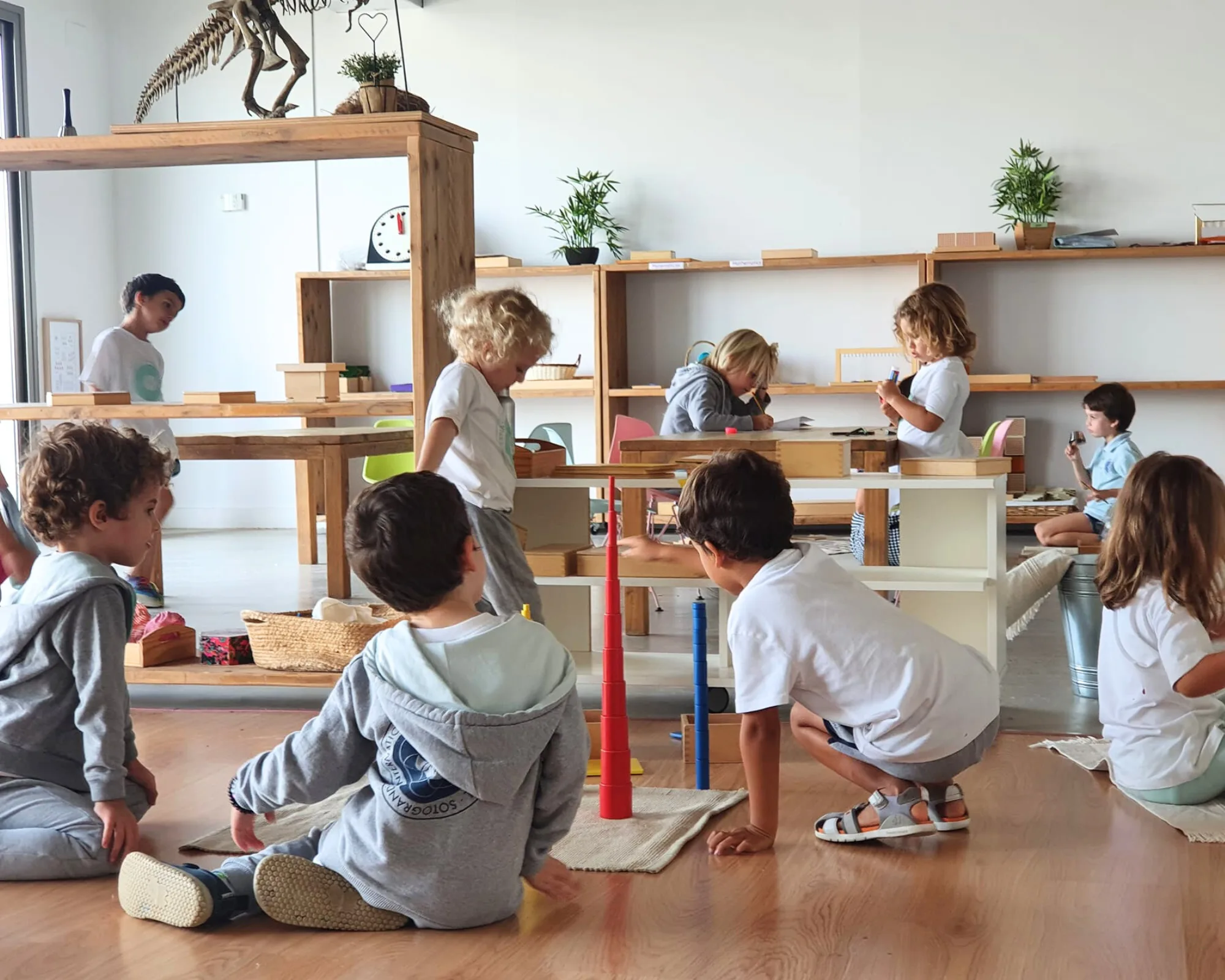
At our international school in Sotogrande, Montessori observation guides every educational decision. If a Children’s House child (ages 3-6) shows interest in letters, the guide doesn’t give them a handwriting worksheet. They prepare the environment with the sandpaper letters, movable alphabet, and sound symbols. But first they observe: is this a passing interest or a consolidated sensitive period?
In the Elementary workshop (ages 6-12), observation allows detecting when a child is ready for deeper research, to work in groups, or to take on a community responsibility. No quarterly exams can replace this daily insight.
Families visiting IMS for the first time are often surprised by the active silence of the classrooms. That silence is the fruit of observation: children work on activities they have chosen because someone has truly understood them.
How to Apply Montessori Observation at Home
You don’t need AMI training to start. You need the willingness to look before acting. These three strategies are direct and transformative.
Observe a tantrum instead of reacting to it. When your two-year-old screams in the supermarket, it’s not an act of rebellion. It’s communication. Before saying “calm down” or “don’t cry,” look: what happened just before? Are they hungry? Overstimulated? Need sleep? Montessori observation applied to tantrums reduces frustration for the whole family.
Record play preferences for one week. Note what your child chooses when they have total freedom. Do they build? Classify? Draw? Care for dolls? These preferences reveal sensitive periods that the Montessori school can reinforce.
Give them 15 minutes of observation without intervening. Set a timer. Sit nearby (not on top). Don’t ask “what are you doing?”. Don’t suggest. Just watch. You’ll see things that surprise you.
Common Mistakes When Observing a Child
Observing isn’t easy. We adults are programmed to intervene. These mistakes are made even by guides in training.
Projecting. “My child is shy” is a label, not an observation. “My child stayed behind me for three minutes before approaching the group” is a data point. Labels close doors; data open questions.
Observing only the negative. If you only note when they cry, you miss when they concentrate. Montessori observation seeks the complete development, not just problem behavior.
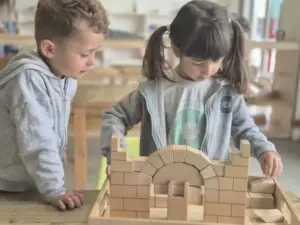
Intervening too quickly. The child has been trying to fit a piece for ten seconds and the adult is already saying “try the other one.” That intervention breaks concentration. Concentration is the foundation of Montessori learning. Protect it by letting the child fail, try, and discover.
Frequently Asked Questions
How old does my child need to be to apply Montessori observation?
Montessori observation is applied from birth. Observing a three-month-old baby teaches you when they are alert, when they need rest, and what stimuli interest them. You don’t need Montessori materials to start: just the intention to look with attention.
Do I need special training to observe my child?
No, to start. The basic principles are accessible: look without judging, record without interpreting, and wait before acting. For deeper practice, AMI guides follow hundreds of hours of training, but any parent can improve their observation skills with daily practice.
How much time should I dedicate to observation each day?
With 10-15 minutes a day of conscious observation, you’ll see changes in how you understand your child. It’s not about watching them all the time, but dedicating specific moments to look with full attention. Quality matters more than quantity.
Does Montessori observation replace school evaluations?
At IMS, Montessori observation is the primary evaluation. Quarterly reports and family conferences are based on data collected during daily observation, not standardized tests. This allows for a much more complete assessment of each child’s development.
Key Takeaways
Montessori observation changes the relationship between adult and child. Instead of directing, the adult learns to read the signals the child has been showing their entire life. It’s a tool that is perfected with practice, but that from the first day produces visible results.
If you want to see how our guides apply Montessori observation in the classroom, book a visit to IMS in Sotogrande. You’ll see silent classrooms, concentrated children, and adults who watch with respect. And probably, you’ll want to start applying the same at home.