
Bilingual Nursery Schools near San Roque: How to Choose the Right One

Finding the right bilingual nursery school near San Roque can feel like navigating a maze. Between acronyms, promises, and differing methodologies, few decisions generate as much anxiety for families relocating to the area. The good news: with the right questions, the landscape becomes clear quickly. In this article we explore bilingual nursery schools San Roque in depth with practical examples.
Key Takeaways When it comes to bilingual nursery schools San Roque, it pays to listen to what families and lead guides actually report.
- Not all ‘bilingual’ schools offer true immersion: ask about the proportion of hours in each language and the qualifications of the guides.
- Ratios and group size directly impact the individual attention your child receives.
- AMI accreditation ensures the Montessori pedagogy is applied with international rigor.
- Sotogrande is only a 10-15 minute drive from San Roque, with free parking at Sotomarket.
- Early bilingualism, according to the American Academy of Pediatrics, does not delay language—it enhances it.
- What Does “Bilingual” Really Mean in a Nursery School?
- How to Evaluate Bilingual Nursery Schools near San Roque: 5 Practical Criteria
- Bilingual Nurseries in San Roque vs. Nearby Montessori Schools
- Why Do Families from San Roque Choose IMS Sotogrande?
- Frequently Asked Questions about Bilingual Nursery Schools near San Roque
- Key Takeaways
What Does “Bilingual” Really Mean in a Nursery School?
The ‘bilingual’ label appears on nearly every nursery in San Roque and the Campo de Gibraltar. However, the content varies greatly. Some centers add an hour of English a day. Others practice dual immersion: two native or bilingual educators who use each language consistently throughout the entire school day. Daily practice with bilingual nursery schools San Roque reveals nuances no handbook fully captures.
To compare, ask directly: how many weekly hours are dedicated to each language? Are the teachers native speakers or do they hold advanced certification? Is the program endorsed by an external body? These answers will tell you if you’re looking at a real program or a cosmetic add-on. Understanding bilingual nursery schools San Roque from inside the classroom reshapes everyday decisions.
How to Evaluate Bilingual Nursery Schools near San Roque: 5 Practical Criteria
1. Methodology and Pedagogical Coherence
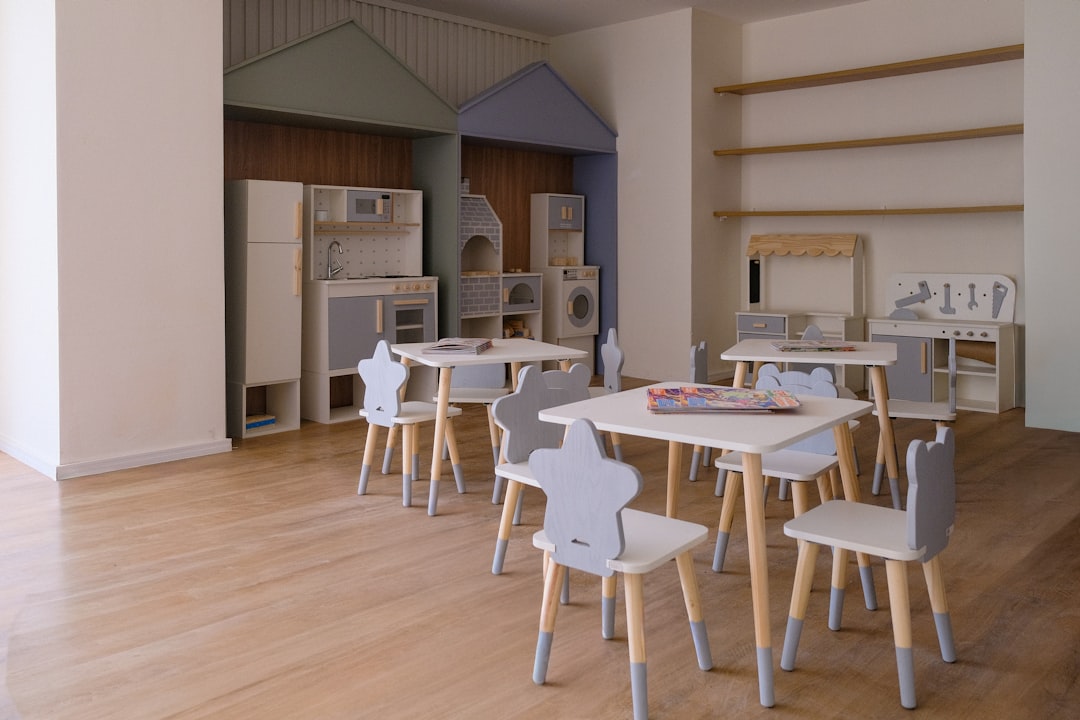
Bilingualism works best when the educational method supports it. A Montessori classroom, for example, organizes the environment into work areas (practical life, sensorial, language, mathematics) where children choose their activity. Each guide speaks one language consistently. This structure supports the natural acquisition of a second language. Concrete data on bilingual nursery schools San Roque is worth reviewing before acting on assumptions.
2. Ratios and Group Size
In early childhood education (0-3 years), a ratio of 1 adult to every 4-5 children is the quality standard. Larger groups require more staff. Ask for specific numbers: don’t accept ‘we are flexible’ as an answer.
3. Staff Qualifications
Do the educators have specific training for the 0-3 stage? Do they hold AMI (Association Montessori Internationale) certification or similar? Training makes the difference between an adult who ‘watches’ and a guide who observes, prepares the environment, and respects individual rhythms.
4. External Accreditations
Accreditations are not a marketing stamp. AMI verifies that the environment, materials, and staff training meet international standards. NEASC (New England Association of Schools & Colleges) adds a layer of curriculum evaluation. In Andalusia, authorization from the Junta ensures regulatory compliance. Three seals, three levels of oversight.
5. Communication with Families
Do you receive weekly reports? Are there periodic tutorials? Can you visit the classroom? Transparency in communication is a sign of a school that takes the family-school relationship seriously.
Bilingual Nurseries in San Roque vs. Nearby Montessori Schools
San Roque has several bilingual nurseries. The offer is limited but varied. If you are comparing, expand your search radius: Sotogrande is only a 10-15 minute drive away via the A-7. There, IMS (International Montessori School Sotogrande) offers a Spanish-English dual immersion program with AMI and NEASC accreditation from age 0.
The IMS Montessori Nido serves children 0-3 years in small groups with AMI-certified guides. The schedule is flexible: until 17:00 for families who need to balance work and family. French is introduced in the Children’s House (3-6 years). It’s not just another nursery: it’s a prepared environment where every detail (furniture, materials, routines) is designed for the child’s autonomy.
Book a personalized school visit and see the environment for yourself. Seeing the classrooms, talking to the guides, and observing the children at work will give you more information than any brochure.
Why Do Families from San Roque Choose IMS Sotogrande?
Many families from San Roque, La Línea, and Algeciras commute daily to Sotogrande. The reasons are concrete:
- True immersion in Spanish and English, not an extra hour of ‘English time’.
- AMI accreditation: the materials and method are the same as in the world’s best Montessori schools.
- Small groups and individualized attention.
- Constant communication: weekly reports, three tutorials per year, a digital platform.
- Secure environment with free parking at Sotomarket.
The journey from San Roque to Sotogrande takes 10-15 minutes. For many families, that time is an investment that more than compensates for the educational quality.
Frequently Asked Questions about Bilingual Nursery Schools near San Roque
At what age is it advisable to start bilingualism?
From birth. Babies can distinguish sounds from different languages from the first months. Early immersion does not confuse: the child’s brain is designed to absorb multiple linguistic systems simultaneously, according to research from the American Academy of Pediatrics (AAP).
How long does it take for a child to speak if attending a bilingual nursery?
Every child has their own pace. In bilingual environments, some words may appear later (18-24 months instead of 12-15), but when language emerges, it does so in two languages simultaneously. It’s a natural process that doesn’t require special intervention.
What is the difference between a bilingual and a trilingual nursery?
A bilingual nursery works with two languages (Spanish and English, for example). A trilingual one adds a third (French, German…). The key isn’t the number of languages, but how they are integrated. At IMS Sotogrande, French is introduced naturally from age 3, when the child already masters routines in Spanish and English.
Key Takeaways
Choosing among bilingual nursery schools near San Roque requires looking beyond marketing. Ask for ratios, staff training, accreditations, and a clear schedule of immersion in each language. Don’t settle for vague promises.
If you want to see how a real bilingual Montessori program works, book a visit to IMS Sotogrande. We are 10 minutes from San Roque. Seeing the classrooms, touching the materials, and talking to the guides will help you make the best decision for your family.









