Montessori School for Highly Sensitive Children Near Estepona & Sotogrande | AMI Guide
![Colegios para niños hipersensibles en Estepona [Guía Montessori]](https://ims-sotogrande.com/wp-content/uploads/2026/06/post-421-img-1-1780929004774-5ab9e154.avif)
When you search for a school for highly sensitive children near Estepona , you know that not every environment will fit. Your child perceives every stimulus, every tone of voice, and every detail of the surroundings with special intensity. On this journey, many families discover that the Montessori method, applied with AMI fidelity, is a haven where high sensitivity is embraced as a gift, not a problem. In this article we explore Montessori school Sotogrande in depth with practical examples.
That’s what we offer at IMS Montessori Sotogrande , a trilingual school just 20 minutes from Estepona via the A-7 highway. We don’t have a specific program for highly sensitive children because Montessori itself respects each child’s pace and sensitivity without labels. When it comes to Montessori school Sotogrande, it pays to listen to what families and lead guides actually report.
- What Does It Really Mean to Be a Highly Sensitive Child?
- The Montessori Method: A Natural Respect for the Highly Sensitive Child’s Rhythm
- School for Highly Sensitive Children Near Estepona: The Montessori Option in Sotogrande, Just 20 Minutes Away
- The Prepared Environment: Less Stress, More Focus
- AMI-Trained Guides: Supporting Without Intruding
- Benefits of Bilingualism (ES/EN) for Sensitive Children
- Frequently Asked Questions
- Key Takeaways
What Does It Really Mean to Be a Highly Sensitive Child?
High sensitivity is an innate trait affecting 15–20% of children, according to psychologist Elaine Aron. It is not a pathology: it’s a deeper processing of sensory and emotional information. These children notice subtleties, become overwhelmed by noise, need more time for transitions, and experience emotions with great intensity. Daily practice with Montessori school Sotogrande reveals nuances no handbook fully captures.
In a traditional classroom, that sensitivity is often mistaken for shyness or slowness. In Montessori, it is understood as a gateway to concentration and empathy. Respecting the child’s sensitive period is the foundation of the pedagogy. Understanding Montessori school Sotogrande from inside the classroom reshapes everyday decisions.

The Montessori Method: A Natural Respect for the Highly Sensitive Child’s Rhythm
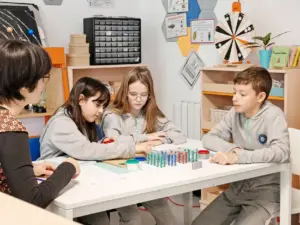
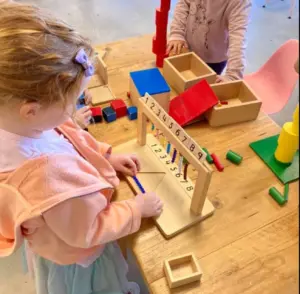
Maria Montessori designed an environment where everything is intended for the child’s development, but without external pressures. Hands-on materials, silence during work periods, freedom to choose a task, and the absence of competition reduce anxiety and allow the highly sensitive child to self-regulate. Concrete data on Montessori school Sotogrande is worth reviewing before acting on assumptions.
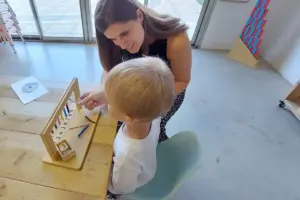
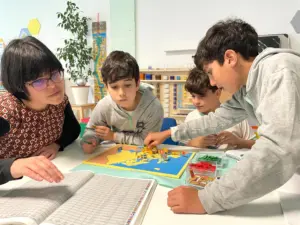
At IMS Sotogrande, each AMI guide observes before intervening. This prevents verbal and emotional overstimulation—key for these children. The prepared environment is not just beautiful; it is a therapeutic resource in itself.

School for Highly Sensitive Children Near Estepona: The Montessori Option in Sotogrande, Just 20 Minutes Away
If you live in Estepona or the surrounding area and are researching schools for highly sensitive children near Estepona , you’ve probably found few alternatives that truly understand this way of being. Many families from San Pedro, Benahavís, and even Estepona make the short daily drive via the AP-7 to Sotogrande because here their children find peace.
We’re not talking about adapting a curriculum; we’re talking about an education that starts with the child. Sensitivity is not corrected; it is channeled. And for that, the school must be a place without hurry or fear.
Schedule a personalized visit to the school and experience our Children’s House or Taller environment in person. Your questions will be better answered by watching the children work with concentration.

The Prepared Environment: Less Stress, More Focus
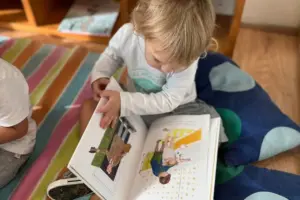
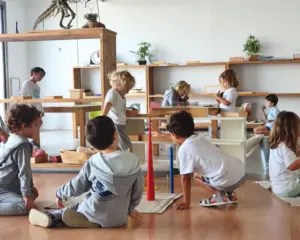
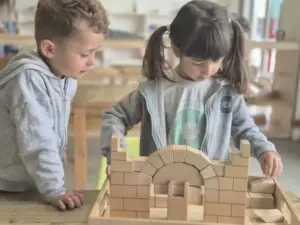
In Montessori, furniture is child-sized, materials are wood and glass, and the aesthetic is minimalist. This reduces sensory load and allows the child to focus on one task at a time. The school day also includes yoga and mindfulness moments, which IMS incorporates across the curriculum.
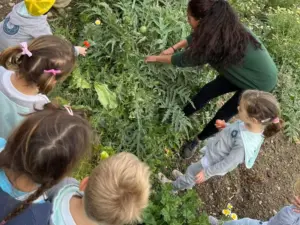
Highly sensitive children often become mentally exhausted in heavily decorated or noisy environments. Our bright classrooms with outdoor spaces offer the calm they need to develop their full potential without overwhelm. Some key features include:
- Natural materials: wood, glass, ceramic; they avoid artificial overload.
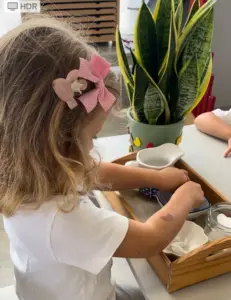
- Visual order: everything in its place, organized trays and open shelves that convey security.
- Individual rhythms: uninterrupted work periods allow the child to immerse in a task without external interruptions.
- Calm corners: spaces designed for the child to retreat when needing a sensory break.
AMI-Trained Guides: Supporting Without Intruding
Adult accompaniment is crucial. An AMI-certified Montessori guide from the Association Montessori Internationale knows when to intervene and, above all, when not to. That “non-doing” is essential with a highly sensitive child: every unnecessary intervention feels like an invasion.
At IMS, our team includes guides experienced in supporting high sensitivity without pathologizing. Plus, the low adult-child ratio (especially in Nido and Children’s House) ensures that each child receives just the right attention, without overwhelm. Continuous training in neuroscience and child development keeps us up to date, but the foundation is always respectful observation.
Benefits of Bilingualism (ES/EN) for Sensitive Children
Thinking in two languages might seem challenging for a highly sensitive child, but studies show that early exposure to two languages in meaningful contexts benefits cognitive development and mental flexibility. At IMS, English and Spanish coexist naturally, without pressure. The child chooses the language they feel most comfortable with at any moment.
Additionally, as an international school with NEASC accreditation and families from over 15 nationalities, linguistic diversity is lived normally. For a sensitive child, being part of a community that values differences is a balm.
Frequently Asked Questions
How does Montessori help a highly sensitive child?
Montessori allows the child to follow their own pace, manipulate concrete materials, and rest when needed. It avoids comparisons and constant evaluations—two stress triggers for highly sensitive children. The guide’s observation ensures the environment adapts to the child, not the other way around.
Are there Montessori schools for highly sensitive children in Estepona?
In Estepona town itself, there is no Montessori school with AMI and NEASC accreditations. However, just 20 minutes by car in Sotogrande, IMS Montessori Sotogrande welcomes many families from Estepona looking for a respectful, personalized education for their highly sensitive children. The drive via the A-7 is quick and well worth it.
Does bilingualism overwhelm highly sensitive children?
Not if introduced naturally and without pressure. At IMS, children don’t “study” English; they live it. Each classroom has two adults—one Spanish-speaking and one English-speaking. This removes the pressure to respond in a specific language and respects each child’s adaptation time. Bilingualism becomes a game, not a demand.
What sets IMS apart from other schools for highly sensitive children near Estepona?
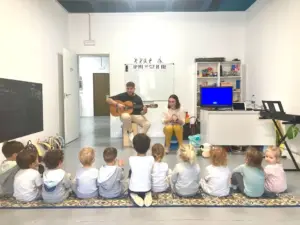
IMS is not in Estepona, but many local families choose it for its fidelity to the Montessori method (AMI), trilingual environment (Spanish, English, French), and holistic approach including yoga, music, and emotional education. Moreover, the low adult-child ratio and stable guide team ensure continuity that gives security to sensitive children.
Key Takeaways
Choosing a school for highly sensitive children near Estepona or any nearby area means going beyond the curriculum: it’s about finding an environment that understands their depth. Montessori, with its innate respect for individual pace, is one of the best-prepared pedagogies to accompany this trait without dramatizing it.
From IMS Sotogrande, we invite you to discover our project in person. Your child’s sensitivity doesn’t need a special school; it needs a respectful school. And that’s what we are. Book an appointment at our admissions page and let the environment convince you.