Montessori Children’s House (Casa de Niños) Guide for 3-6 Years near Sotogrande | IMS
In short
Stepping into a Montessori Children's House is like entering a world made to a child's measure. There are no rows of desks or a teacher at the front giving the same lesson to everyone. The room is filled with beautiful materials, arranged on low shelves, and each child moves freely to choose what they need.
- What is the Montessori Children's House (Casa de Niños)?
- What a Day Looks Like in Our Montessori Children's House
- How to Choose a Montessori Children's House in Sotogrande
- Benefits of the Montessori Children's House for Your 3-6 Year Old
- The Montessori Guide in the Children's House: More Than a Teacher
- Frequently Asked Questions
- Key Takeaways
What is the Montessori Children’s House (Casa de Niños)?
Stepping into a Montessori Children’s House is like entering a world made to a child’s measure. There are no rows of desks or a teacher at the front giving the same lesson to everyone. The room is filled with beautiful materials, arranged on low shelves, and each child moves freely to choose what they need. A child’s brain from 3 to 6 years is like a sponge. Maria Montessori called it the “absorbent mind.” That’s why the Children’s House takes advantage of this developmental window to sow independence, concentration, and a love of learning from within. At IMS Sotogrande, we live this stage with a deep respect for what the child can already do and for all they have yet to discover. In this article we explore Montessori Children’s House Sotogrande in depth with practical examples.
What a Day Looks Like in Our Montessori Children’s House
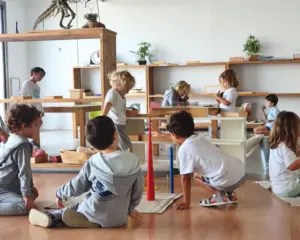
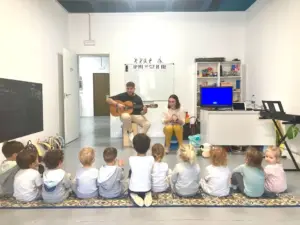
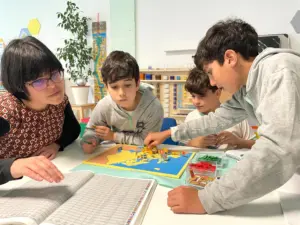
At IMS Sotogrande, the Children’s House welcomes children from 9:00 AM. Families can choose between a half-day until 2:00 PM or a full day until 3:00 PM, with the option to extend until 5:00 PM. The children set the pace. After greeting the guide, they get to work. Some choose the pink tower, others draw maps or wash cloths in the practical life corner. There is no bell constantly interrupting their concentration. The guide observes and accompanies but does not direct. Snack time and outdoor play are also part of learning: pouring water, sharing fruit, or climbing a tree are daily activities. Some mornings we dedicate time to yoga or mindfulness, and music is always present. Everything flows in a quiet rhythm that might seem chaotic but is deeply intentional. When it comes to Montessori Children’s House Sotogrande, it pays to listen to what families and lead guides actually report.
The Prepared Environment: Order, Freedom, and Concrete Materials
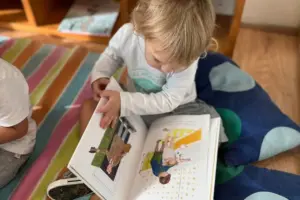
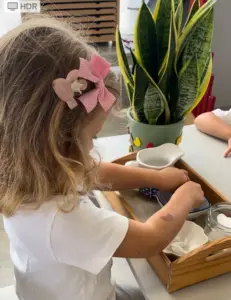
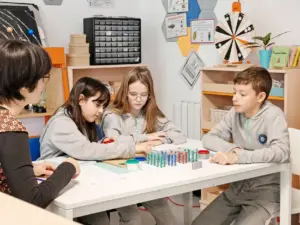
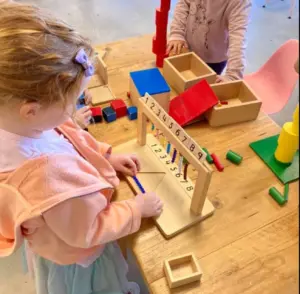
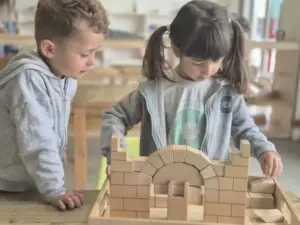
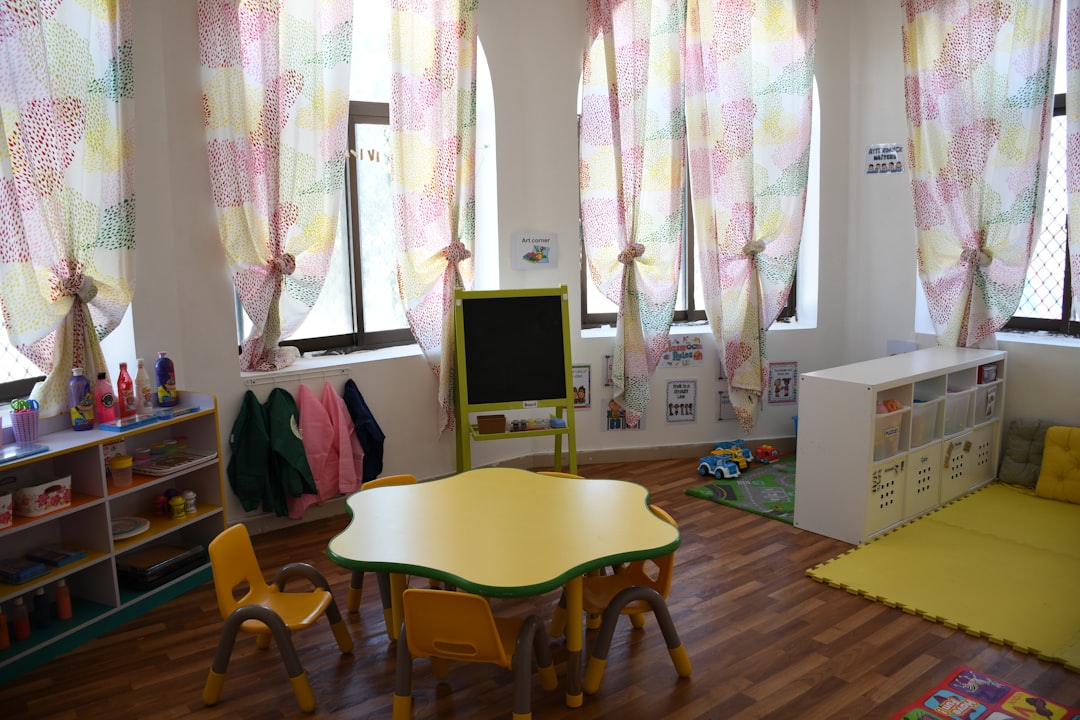
The classroom is designed so that the child feels it is theirs. Each material has its own tray, fixed place, and clear purpose. Toys are not piled up. There are materials for practical life (pouring, buttoning, sweeping), sensory (pink tower, brown stairs, sound bottles), language (sandpaper letters, movable alphabet), and math (golden beads, number rods). All invite manipulation and self-correction of error. The child notices if something doesn’t fit without an adult pointing out the mistake. By just three years old, they move through the Children’s House as if it were their second home. For us, that is the greatest sign that the environment works. Daily practice with Montessori Children’s House Sotogrande reveals nuances no handbook fully captures.
Spanish-English bilingualism runs throughout the day. One guide always speaks in English, the other in Spanish. Children transition from “water” to “agua” naturally, without forced translation. At IMS Sotogrande, we are the only school in the area with true dual immersion, and it shows from the Children’s House onward. Understanding Montessori Children’s House Sotogrande from inside the classroom reshapes everyday decisions.
How to Choose a Montessori Children’s House in Sotogrande
Choosing a school for a 3-year-old is one of those decisions that keeps you up at night. If you are in Sotogrande, Alcaidesa, La Línea, Algeciras, or even coming from Estepona or Gibraltar, you might wonder what difference there is between a Montessori Children’s House and a traditional nursery. The answer lies in the accreditation and the way the child is supported. A school can call itself Montessori without being truly Montessori. So look for endorsement from the Association Montessori Internationale (AMI) and for AMI-trained guides. At IMS Sotogrande, we have that double guarantee, plus the international NEASC accreditation, which very few schools in Spain have. Quality is not just a slogan: you see it when you step into the classroom and see children working concentrately, the guide kneeling to speak at their height, and the calm atmosphere. Concrete data on Montessori Children’s House Sotogrande is worth reviewing before acting on assumptions.
Many families tell us that when they visit other schools, they don’t see the same. Here, there are no worksheets, rewards, or punishments. There is a child who feels in charge of their own learning. Reserve a personalized visit to the school and see for yourself.
Benefits of the Montessori Children’s House for Your 3-6 Year Old
Neuroscience studies support what Maria Montessori observed over a century ago: movement, manipulation, and free choice deeply activate learning. In the Children’s House, the benefits go beyond academics. Yes, children learn letters, numbers, geography, and science, but they also learn to take turns, resolve conflicts with words, and care for the classroom plants. Executive function development (planning, impulse control, sustained attention) is one of the great treasures of this stage. When a 5-year-old spends twenty minutes threading a needle or doing sums with beads, they are building the same concentration skills they will need in ten years to study for an exam or solve a complex problem. And they do it with a smile, not out of obligation.
In a bilingual environment like ours, English integrates without pressure. Children absorb the second language just like their native one. Additionally, IMS’s Rainbow classroom allows children with special educational needs to receive the support they need within the same group, with specialist guidance. Diversity is part of life, and the Children’s House celebrates it.
The Montessori Guide in the Children’s House: More Than a Teacher
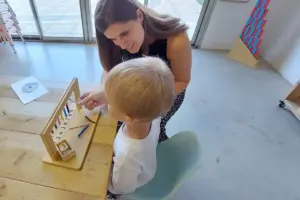
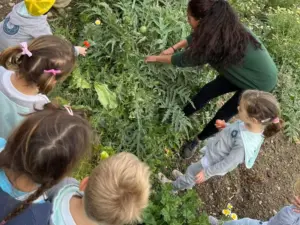
What sets a true Montessori Children’s House apart is the role of the guide. They are not a “teacher” who controls from a desk. They are a passionate observer, trained for months in AMI philosophy, who knows when to present new material and when to step back. At IMS, we have guides like Vanessa Coso and Jesica Jiménez, who have been accompanying children of this stage for years. They don’t teach: they connect the child to the environment and trust their ability. Behind every presentation is deep knowledge of sensitive periods: order, language, movement, senses. If a child is fascinated by numbers, the guide gradually offers golden beads. If another needs to strengthen fine motor skills, they suggest the button frame or gardening. Everything flows unhurriedly and with great respect.
Frequently Asked Questions
What is the difference between a Montessori Children’s House and a traditional nursery?
The key difference lies in intention. A nursery mainly aims to support work-life balance. The Children’s House is a structured educational environment for the deep development of the 3-6 year old. Here, there is no “unorganized free play,” but freedom within limits in a rich environment with scientific materials. The adult does not fill the day with busywork: they observe and connect the child to what they truly need to grow. Moreover, at IMS, bilingual immersion and AMI and NEASC accreditations add a layer of quality rarely found in conventional nurseries.
Is my child ready for a Montessori Children’s House if they’ve never been in a Montessori environment?
Yes, absolutely. The transition from home or another school is one of the processes we cherish most. During the first few weeks, the guide dedicates time to patiently introduce the child to the routines, materials, and spaces. They don’t need to know anything beforehand: the beauty of Montessori is that each child starts from where they are. You will see how quickly they move around the classroom as if they had always been there. At age three, the need for independence and order is universal. The Children’s House welcomes and nurtures it.
How are reading, writing, and math taught in the Children’s House?
In a sensory, pressure-free way. The child touches sandpaper letters, traces shapes in sand, composes words with the movable alphabet before being able to write them with a pencil. Writing then bursts forth as a natural explosion, just like reading. Math moves from concrete to abstract: first they count beads and rods, then they understand the decimal system by manipulating real quantities. The result is not just a child who can add at age five. It’s a child who understands why we add and enjoys doing it. No repetitive worksheets or exams. Just discovery.
Key Takeaways
The Montessori Children’s House is the most valuable gift you can give your child between the ages of 3 and 6. It’s not about rushing content, but about respecting the natural rhythm with which each child builds their mind and character. At IMS Sotogrande, we live that commitment daily, with AMI guides, a bilingual environment, and the warmth of an educational tribe that will walk with you every step. If you are looking for an education that goes beyond academics and prepares your child for life, come visit us. Book your no-obligation visit, and we’ll show you why so many families in Campo de Gibraltar trust us.