
What Can a 10-Month-Old Eat? Montessori Guide to Foods, Textures & Self-Feeding | Expat Families in Sotogrande & Costa del Sol
In short
What can a 10-month-old eat is a common question once complementary feeding is well established. At this age, babies move beyond smooth purees and start handling soft chunks, imitating table manners, and showing clear preferences. In Montessori, this is a prime opportunity to nurture independence and a healthy relationship with real food.

What can a 10-month-old eat is a common question once complementary feeding is well established. At this age, babies move beyond smooth purees and start handling soft chunks, imitating table manners, and showing clear preferences. In Montessori, this is a prime opportunity to nurture independence and a healthy relationship with real food. In this article we explore Montessori feeding 10-month-old in depth with practical examples.
Complementary feeding at 10 months: what exactly can a 10-month-old eat?
The practical answer is: almost everything, as long as it’s safely cooked and has the right texture. The American Academy of Pediatrics (AAP) and the World Health Organization recommend offering a variety of nutrient-rich foods from 6 months onward. By 10 months, most babies have tried several food groups and their digestive systems handle more complex combinations well. When it comes to Montessori feeding 10-month-old, it pays to listen to what families and lead guides actually report.
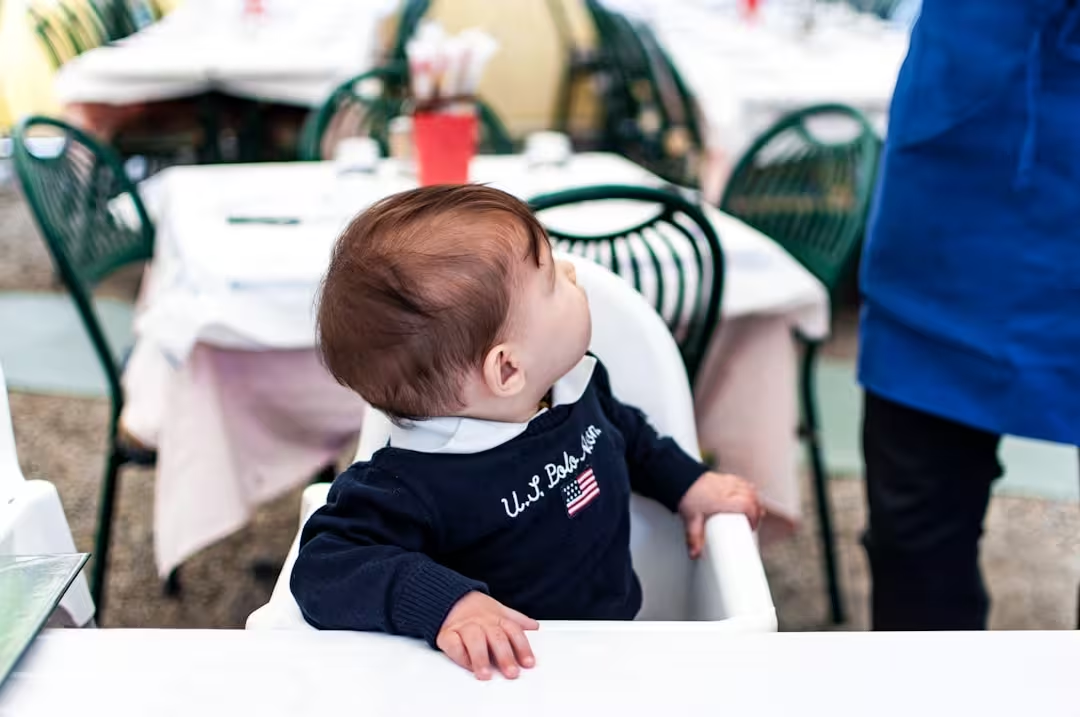
From a Montessori perspective, it’s not just about what but how. We invite babies to join family meals, seated at the table in a high chair without a tray, with an unbreakable glass plate and adapted utensils. This social exposure accelerates learning and reduces food refusal. Daily practice with Montessori feeding 10-month-old reveals nuances no handbook fully captures.
Recommended foods for a 10-month-old
Base meals on natural, unprocessed ingredients. Here’s a practical table of what a 10-month-old can eat and how to prepare it:
- Proteins: chicken, turkey, minced or shredded beef, white fish and small oily fish (boneless), cooked and mashed legumes (lentils, chickpeas, beans), well-cooked whole egg (scrambled or thin omelette).
- Grains and tubers: rice, small whole-wheat pasta, quinoa, couscous, oats, sourdough bread without crust, potato, sweet potato, cooked cassava.
- Fruits and vegetables: ripe banana, pear, baked apple, melon, watermelon, mango, avocado, broccoli, zucchini, cooked carrot, pumpkin. Always cut into chickpea-sized pieces or sticks the baby can grip.
- Dairy: plain unsweetened yogurt, low-salt pasteurized fresh cheese. Formula or breast milk remains the primary dairy source until 12 months. Whole cow’s milk can be offered in small amounts mixed with cereals, but never as the main drink before 12 months without pediatric supervision.
A simple menu could include: breakfast with oatmeal and banana, lunch with brown rice balls, steamed broccoli and roast chicken pieces, dinner with zucchini cream and thin omelette strips. The visual and tactile variety makes mealtime a full sensory experience.
Conversely, some foods remain off-limits until 12 months or later due to choking risk or digestive readiness: whole nuts, uncut grapes, popcorn, hard raw vegetables, honey (botulism risk), cow’s milk as main drink, sugary juices, and any ultra-processed or salted foods.
Textures and independence: the Montessori approach to feeding a 10-month-old
Montessori sees eating as an act of personal conquest. Around 10 months, babies refine the pincer grasp and can pick up small objects. This motor milestone is ideal for offering finger foods or soft balls they can bring to their mouth independently. Baby-Led Weaning (BLW) fits perfectly with this principle: the adult prepares and offers. The baby decides what, how much, and how fast to eat.
In the Infant Community (Nido) classrooms at IMS Sotogrande, where we welcome children from 16 months, lunchtime is one of the most anticipated moments. Children help set the table, pour water from a small pitcher, and handle real utensils under the guide’s attentive eye, without interference. This dynamic is easy to replicate at home.
To foster mealtime independence, create an adapted environment: a deep plate that doesn’t tip, a small learning cup, a large cotton bib that covers clothes, and an easy-to-clean surface. Offer two or three different options on the plate and let them explore with their hands. At this age, squishing, smelling, and throwing are part of learning.
Trust the baby’s self-regulation instinct. Forcing food or distracting with screens disrupts their innate ability to sense hunger and fullness. Patience pays off: a study in Appetite found that BLW-fed children have a lower tendency toward childhood obesity because they are allowed to self-regulate from the start.
Book a personalized visit to our school to see our prepared environments and how we support each developmental stage: Schedule a personalized school visit.
The role of family and tribe: consistency and example
A 10-month-old learns by imitation. If they see you eating veggies with enthusiasm, they’re more likely to accept them. Eating together whenever possible, without rushing or arguing about amounts, is the ideal framework. In Montessori, we call this “the table as a meeting place,” not a battlefield.
Many families arriving at our school from Sotogrande, San Roque, Alcaidesa, or even from Gibraltar and Estepona share the same concern: “I don’t know if my child is eating enough.” The answer is usually the same: trust the process and their body’s signals. A healthy, active baby with a steady growth curve is eating what they need, even if they reject broccoli one day or just suck on a piece of bread.
Establishing predictable routines, same time, same place, same ritual, reduces anxiety. Before eating, wash hands together, put out a placemat, and sing a little song. Afterward, clear the plate together. For Montessori, these daily actions are authentic practical life lessons.
Common challenges and how to handle them with respect
It’s normal for a 10-month-old to go through phases of selective refusal, throwing food, or refusing new textures. Instead of labeling the child a “picky eater,” Montessori suggests observing without judgment. Perhaps their gums are sore from teething, they’re overstimulated, or simply not hungry. Removing the plate without drama and offering again later usually works better than insisting or scolding.
When food falls on the floor, the Montessori message is not to scold but to involve the child in the consequence: “I see the spoon fell. Would you like help picking it up?” At this age, babies understand far more than they can express, and participating in cleanup restores their sense of belonging.
If refusals persist and weight gain stalls, consult your pediatrician. At IMS, as an educational center, we never replace medical evaluation, but we can share what we observe in the school environment: a calm, coercion-free atmosphere encourages voluntary eating.
Frequently asked questions
Can I give nuts to a 10-month-old?
Never whole or in large pieces due to serious choking risk. From 10 months, you can offer them ground, as a cream (no sugar or salt), or as a powder sprinkled on fruit. Almonds, walnuts, and peanuts are common allergens. Introduce them one at a time with a three-day gap to detect reactions.
How much breast milk or formula does a 10-month-old need?
At 10 months, milk (breast or formula) remains the primary food, providing about 400-500 ml per day across 3-4 feeds. After 12 months, the amount can gradually decrease if solid food intake is varied and sufficient. Never stop breastfeeding or bottle-feeding abruptly. Respectful weaning is key.
What if my child wants to use utensils but gets frustrated?
This is a typical phase. Offer a learning utensil (small silicone or stainless steel fork and spoon) for exploration while they eat with their hands. You can also load the utensil and place it at the edge of the plate so they bring it to their mouth. Consistent practice and patience, without correcting grip, will have them handling utensils confidently in a few weeks.
Key takeaways
What can a 10-month-old eat is just the tip of the iceberg: the real transformation happens when we allow the child to experience eating as an autonomous, pleasurable act. Natural ingredients, safe cuts, and a pressure-free environment are all it takes. The table becomes a space for connection, sensory learning, and building self-confidence.
If you’re looking for an educational environment that supports each stage with this respectful approach, we invite you to visit our Nido (0-3) and Children’s House (3-6) classrooms in Sotogrande. Schedule a no-obligation visit and see how we support your child’s holistic development from feeding to intellectual independence.









