
Montessori Activities for 5 Year Olds: A Family Guide in Sotogrande & Costa del Sol
In short
When a 5-year-old plays, they're not just having fun. They are building logical thinking, coordination, and the ability to make decisions independently. The best Montessori activities for 5 year olds are those that respect their need for movement, hands-on exploration, and the chance to repeat an activity until mastered. In Montessori pedagogy, play is not empty entertainment.

When a 5-year-old plays, they’re not just having fun. They are building logical thinking, coordination, and the ability to make decisions independently. The best Montessori activities for 5 year olds are those that respect their need for movement, hands-on exploration, and the chance to repeat an activity until mastered. In Montessori pedagogy, play is not empty entertainment. It is serious work, a window into their absorbent mind that is now becoming more reasoning.
At IMS Sotogrande, we accompany children of this age every day in our Children’s House, where the prepared environment offers freedom with clear limits. It’s not about filling the shelf with noisy toys or screens. The key is choosing options that connect with their real interests and allow them to progress at their own pace.
- What a 5-Year-Old Really Needs When Playing
- Practical Games That Develop Independence
- Sensory Games That Sharpen the Senses
- Language and Pre-Writing Games
- Movement as Play
- Montessori Games for 5 Year Olds with Others: The Social Seed
- Common Mistakes When Choosing Montessori Activities for 5 Year Olds
- Frequently Asked Questions
- Key Takeaways
What a 5-Year-Old Really Needs When Playing
At this age, external order remains important, though they are beginning to build a stronger internal order. The 5-year-old seeks games with a clear purpose: sorting, building, measuring, counting, drawing letters and numbers with a steady hand. They are drawn to cause and effect, challenges they can solve on their own, and increasingly, collaboration with others.
That’s why the Montessori activities for 5 year olds that work best are those offering multiple difficulty levels and allow self-correction. A map puzzle, for example, only fits when the piece is correctly placed. The child doesn’t need an adult to say “that’s wrong”: they discover it themselves. That experience of real success builds self-esteem far more than empty praise.
In our school, after observing dozens of five-year-old students, we see three major areas of interest that should be nourished with good play: practical life, sensory exploration, and the awakening of literacy and math.

Practical Games That Develop Independence
Children this age love to feel capable. Simple activities like preparing their own snack, watering plants, or folding napkins give them control over their environment, strengthening confidence. You don’t need expensive toys. A small pitcher of water and a real glass for practicing pouring, or a butter knife for cutting a soft banana, are enough.
These Montessori activities for 5 year olds belong to the “practical life” area of Montessori. At home, you can replicate them with everyday items: a mismatched sock to practice folding, a tray with rice and spoons for transferring, or a box with large buttons for buttoning. The secret is to present the activity on a tray or in a basket, show the procedure without words, and then let the child repeat as much as they want.
A common mistake is interrupting with corrections. If the child spills water, offer a cloth and resolve it without drama. That naturalness turns mistakes into learning, not punishment. Book a personalized visit to the school and see how these routines come to life in our classrooms.
Sensory Games That Sharpen the Senses
At 5 years old, the mind still needs clear sensory impressions to classify the world. Materials like the pink tower, brown stair, or Montessori color boxes allow isolating qualities: size, weight, texture, temperature. They are not just toys. They are tools that educate perception.
At home, you can prepare sensory games with what you have: a basket with fabrics of different textures (silk, wool, cotton) for the child to match blindfolded. Jars with spices to recognize smells. Or weights of different grammages that they can order from lightest to heaviest. These Montessori activities for 5 year olds refine observation skills and prepare the mind for later mathematical and geometric concepts. As the Association Montessori Internationale explains, “the hand is the instrument of intelligence,” and at 5, hands need to touch, compare, and discover according to AMI principles.
Purposeful Building Games
Wooden blocks, interlocking toys, and magnetic sets are not just creative. They introduce the child to geometry and intuitive physics. Instead of giving instructions, pose open challenges: “What’s the tallest tower you can build without it falling?” This type of Montessori activity for 5 year olds combines the joy of creating with the need to plan and test hypotheses.
At IMS, our Children’s House students use geometric solids and constructive triangles, which are much more than a pastime. They allow visualizing spatial relationships and spark genuine interest in mathematics. A family from Algeciras recently told us that their daughter, after working with the triangles at school, started pointing out geometric shapes at home: “Mom, that window is a hexagon.” That’s what happens when play has depth.
Language and Pre-Writing Games
At this age, many children explode with interest in letters and sounds. The Montessori approach does not push early reading but paves the way with games that isolate skills: initial sound games, matching objects to cards, tracing letters in a sand tray, or with fingers on sandpaper.
A very effective game is “I spy” with sounds instead of letters: “I spy something that starts with /m/…” This connects phonetics with the real object. For writing, Montessori activities for 5 year olds should focus on stroke, not perfect handwriting. Sandpaper letters and the Montessori lined board are ideal. In our school’s lending library, we also recommend books with clear type and not too busy illustrations that distract from the written word.
Movement as Play
A 5-year-old should not sit still for more than 20 minutes at a time. They need to jump, run, climb, swing. These are not distractions from learning. They are learning itself. Movement refines proprioception, balance, and bilateral coordination, foundations for writing and concentration.
In Sotogrande, the environment gives us a vast natural park. Many families from San Roque, La Línea, or Gibraltar come to our school precisely for the opportunity to combine an indoor Montessori environment with outdoor activities. An afternoon at the beach collecting shells and sorting them by size can be the best math game. Or carrying water with buckets in the garden to water pots, a motor and precision challenge.
Montessori Games for 5 Year Olds with Others: The Social Seed
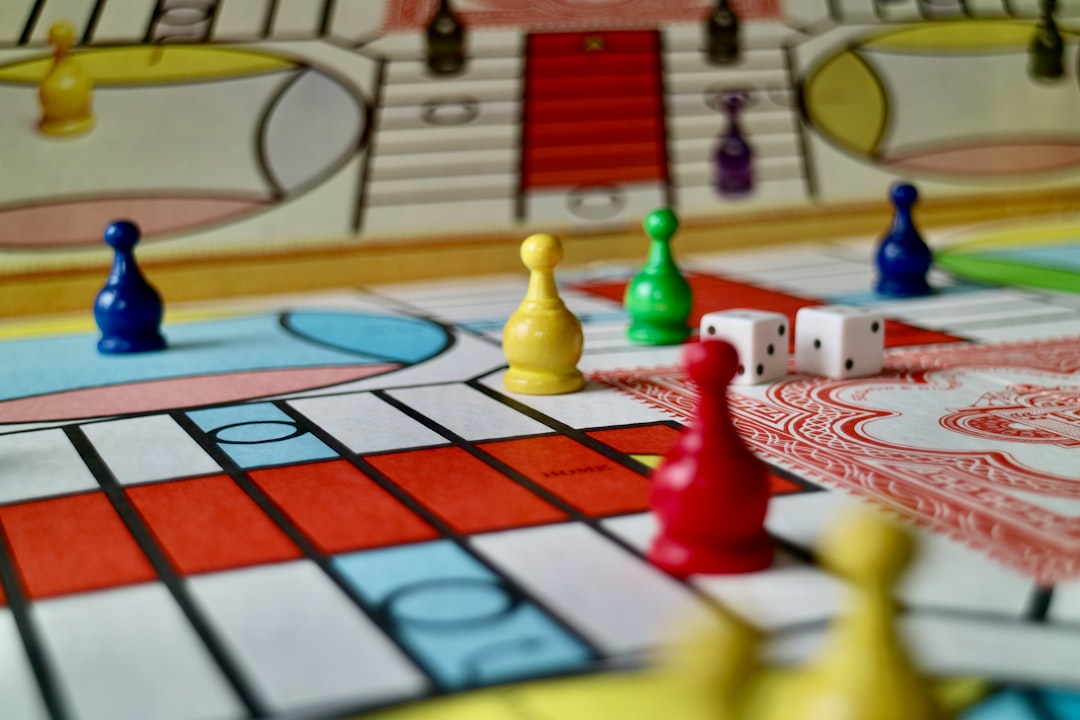
At this stage, the ability to cooperate solidifies. Games with simple rules, turn-taking, and negotiation become possible, though they still need adult guidance to resolve conflicts without humiliation. Cooperative board games, where everyone wins or loses together, are excellent. Also, games imitating professions: setting up a restaurant, hospital, or store allows practicing social roles and oral language with real purpose.
In our school, mixed-age classrooms (3 to 6 years) create a natural play-help environment. The 5-year-olds are usually the “older ones” in the class: they help the little ones button their aprons or pick up materials. That strengthens their leadership and empathy in a way no programmed game can match.
Common Mistakes When Choosing Montessori Activities for 5 Year Olds
One of the most frequent mistakes is overwhelming with too many options. Ten toys on the floor scatter attention. Better to rotate four or five well-chosen options weekly. Another mistake is choosing games that do everything for the child (talking windows, lights, automatic melodies). These stifle initiative. The child becomes a passive spectator, not an active builder.
It is also a mistake to think that at 5 they are “big kids” and offer too abstract games or unlimited screen time. Neuroscience shows that the prefrontal cortex, responsible for self-control and planning, matures slowly until adolescence. So Montessori activities for 5 year olds should remain concrete, manipulative, and with a strong sensory component, as the American Academy of Pediatrics reminds us in its early childhood play guidelines.
Frequently Asked Questions
How many toys does a Montessori 5-year-old need?
Fewer than you might think. 6 to 8 well-selected materials rotated weekly is enough. The important thing is not quantity but that each game has a clear purpose and allows deep concentration.
Can I use Montessori activities at home without specific training?
Absolutely. Montessori philosophy does not require a degree. It only requires observing what your child needs at each moment, preparing a simple environment, and offering activities with respect, without intervening while the child is focused. AMI guide training deepens this, but at home you can start today with what you have.
Are screen-based games appropriate for this age?
Montessori pedagogy recommends avoiding screens before age 6, except for very occasional use and always with an adult. At 5, the brain still needs three-dimensional experiences and real movement. A letter app can never replace the sandpaper letter the child traces with their finger.
How do I know if an activity is truly Montessori?
An activity is consistent with Montessori if it isolates one difficulty, allows self-correction, is made of natural materials (wood, metal, fabric), has a visual or tactile control of error, and encourages self-directed activity. If it needs batteries or a screen, it probably isn’t.
Key Takeaways
Choosing Montessori activities for 5 year olds is much more than buying a nice gift. It is offering tools that feed their natural curiosity, thirst for independence, and ability to concentrate on what matters to them. At IMS Sotogrande, every material in our Children’s House has been selected with that criteria, and the results are seen in children who at 5 are already confident, curious, and respectful of others.
True play is not what entertains, but what transforms. If you want to see how we accompany this process in a trilingual environment, with AMI guides and just minutes from Algeciras, Estepona, or La Línea, we invite you to request a visit. The journey is worth it when you see your child growing happy, independent, and prepared for life.









