
Babysitter in Manilva: Montessori Nanny (Practical Guide)
In short
Finding a babysitter in Manilva when you follow Montessori pedagogy is not simply hiring someone to "watch" your child. It is choosing a person who understands (or at least respects) the principles of autonomy, order, and respect for the child's rhythm. As a Montessori guide at IMS Sotogrande, I see daily how consistency between home and school makes a difference.

Finding a babysitter in Manilva when you follow Montessori pedagogy is not simply hiring someone to “watch” your child. It is choosing a person who understands (or at least respects) the principles of autonomy, order, and respect for the child’s rhythm. As a Montessori guide at IMS Sotogrande, I see daily how consistency between home and school makes a difference. And when a family from the Manilva area asks me, I always say the same: the ideal babysitter does not need to be an AMI expert, but she must have certain attitudes. In this article we explore babysitter Manilva in depth with practical examples.
Many families moving to the Campo de Gibraltar area, whether to Manilva, Sabinillas, Sotogrande, or Estepona, face this dilemma. Especially when both parents work or arrive without a support network. That is why today I want to share with you the keys I give at school so that the time with your babysitter does not become a parenthesis in the education you care so much about. When it comes to babysitter Manilva, it pays to listen to what families and lead guides actually report.
The search for a babysitter in Manilva with a Montessori perspective
Looking for a babysitter in Manilva is not the same as looking for one in a big city. Here the offer is more limited, but the community is closer. The key is understanding that you do not need a “mini Montessori teacher.” You need someone who respects the child as a person. Someone who does not lift them into the high chair without asking permission, who allows them to try to tie their shoelaces without rushing, and who does not correct them every time they make a mistake. Daily practice with babysitter Manilva reveals nuances no handbook fully captures.
I remember when a mother from Manilva contacted me worried because her babysitter was giving puree to her 18-month-old at full speed, “because she didn’t want him to get dirty.” That little one was missing the opportunity to eat alone, a key moment for autonomy. So we worked together on a plan to train the babysitter in very simple guidelines. Within two weeks, the child was using the spoon clumsily, but happily. That is pure Montessori: trust in his abilities.
The best part is that the babysitter does not need to have read Maria Montessori. But it is helpful if she knows some concepts such as “sensitive periods,” “absorbent mind,” and the value of unstructured free play. You can read more about these concepts on the AMI website or the Spanish Montessori Association. If you can find someone who has worked in a nursery school or has training in respectful parenting, even better.
What do I ask of my babysitter? The keys to a prepared nanny
To ensure that the person you choose shares your philosophy, I recommend looking for these attitudes during the first interviews. It is not so much about what she says, but what she does:
- Observes without constantly intervening. This is the basis of the method. Your babysitter should know how to wait, watch, and only help when the child really needs it.
- Proposes activities, does not impose entertainment. TV or tablets are not emergency options. The ideal babysitter takes out a box of nature items or simply sits on the floor stacking blocks with your child.
- Respects order and routines. Young children need to know what will happen. If the babysitter arrives at the same time and follows a small routine of snack, play, and cleanup, the child will feel safe.
- Speaks calmly and in a low voice. The Montessori adult does not yell or use a childish tone. He or she addresses the child with respect, giving real choices whenever possible.
Do not expect perfection from day one. Even I, as a guide, needed time to refine my perspective. But if you see that the babysitter is able to restrain her impulse to “teach” and instead “accompanies,” you are on the right track.
Interview and adaptation period: how to ensure she fits
I have prepared this small guide of questions you can ask a candidate. Do not fire them off as an interrogation, but in a relaxed conversation over coffee at home with the child present:
- “What would you do if my child is very focused on fitting pieces and 20 minutes pass?” (Desired answer: “I would leave him, supervising without disturbing.”)
- “How do you react when a child throws food on the floor on purpose?” (Good sign if she mentions setting clear limits without anger, involving the child in cleaning up.)
- “Do you think children should be forced to share their toys?” (The Montessori view is that the child chooses when and how to share. It is not forced.)
- “What kind of games would you propose for a rainy day?” (The answer should include things like making cookies, building a blanket fort, or painting.)
After the interview, propose an adaptation period of at least one week. Be present the first days, observe, and above all, trust your intuition. If you feel the babysitter respects your child’s rhythm and does not try to “mold” him to be more convenient, that is a good sign. By the way, these guidelines are very similar to those we follow in our admissions process at IMS: you know your child better than anyone, and your opinion is essential.
If all this resonates with you and you want to see what a real Montessori environment looks like, come meet us: you can book a no-obligation visit. It will be a pleasure to accompany you.
Babysitter in Manilva and transition to Montessori school in Sotogrande
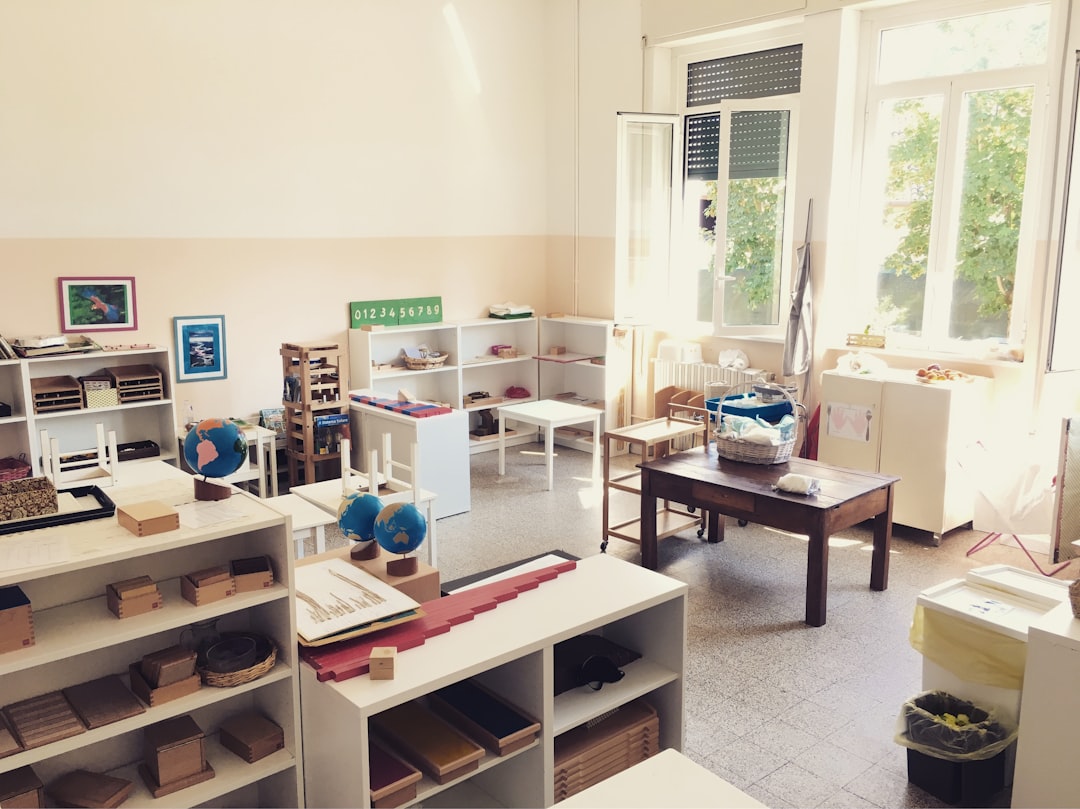
There comes a time when families from Manilva who have chosen a babysitter with Montessori sensitivity consider the next step: school. And it is logical, because around 2 or 3 years old the child needs broader social stimulation and a professionally prepared environment. This is where IMS Sotogrande becomes a natural option. Located in Sotogrande, just 10-15 minutes by car from Manilva, we offer programs from 0 years with our Nido Roots or Wings, and the Children’s House from age 3.
The transition is much smoother when the child has lived in a consistent environment. Many mothers from Manilva tell us they notice their children are more autonomous and calm after a few months with us. And although the journey may start with a babysitter in Manilva, it often ends in our light-filled classrooms, where the child becomes part of an authentic trilingual Montessori community. If you want to know the environment, I invite you to book a personalized school visit and we will tour the facilities together.
Additionally, if you are concerned about budget, here is a real fact: the 2026-2027 rates for Nido start at €600 per month (9:00-13:00) and for Children’s House from €650 per month (9:00-14:00). And we always apply sibling and annual payment discounts. It is not an expense. It is an investment in the person your child will become.
Frequently asked questions
What is the difference between a traditional babysitter and a babysitter who knows Montessori?
The main difference is in the perspective. A traditional babysitter usually “entertains” the child, while a babysitter with Montessori or respectful training “accompanies” their development. The former may turn on the TV to keep the child still. The latter sits with him to observe an insect in the garden for half an hour if the child shows interest. It is not about being more or less affectionate, but about respecting the child’s internal processes.
Can I ask my babysitter in Manilva to follow certain Montessori routines at home without her being an expert?
Absolutely. You just need to explain two or three key things: that your child can serve himself water if he has a small pitcher and a glass at his height, that she should not give immediate solutions when he is frustrated with a toy, and that she should limit her intervention to ensuring physical safety. Most babysitters appreciate these guidelines because they take pressure off and help them connect better with the child.
How can I prepare my home so that the babysitter maintains the prepared environment?
Prepare the space before her arrival: leave within the child’s reach a tray with cut fruit for the child to serve himself, a couple of open toys (wooden blocks, a simple puzzle), and nothing that requires constant supervision. This way, the babysitter can easily follow the dynamic. Do not forget to have a stool for the child to wash his hands alone and a mirror at his height. These small details turn a house into a true prepared environment.
Can my child attend IMS school if we live in Manilva?
Yes, of course. Many of our families live in Manilva, Sabinillas, or Estepona. The drive from the center of Manilva to IMS Sotogrande is usually no more than 15-20 minutes. Additionally, being right next to exit 133 of the A-7 highway, the connection is very fast. If you are concerned about logistics, the school can guide you on routes and schedules.
Key takeaways
Choosing a babysitter in Manilva when you believe in Montessori is not impossible. You just need clarity on what is important and an open attitude to train the person who will care for your child. In the end, it is not about finding a certified guide, but someone who looks at your child with the same eyes of wonder and respect as you do.
And remember: that first step with the babysitter can be the beginning of a journey that leads your little one to a school like IMS Sotogrande, where autonomy, confidence, and love for learning are cultivated every day. If you want to explore that option, we would be happy to welcome you.









