
Montessori Child Autonomy: How the Method Fosters Independence

The Montessori child autonomy is one of the pillars that transforms the way we understand childhood. Instead of depending on the adult, the child becomes the main architect of their own learning. And this is not an ideal, but a tangible reality in the prepared classrooms of schools like IMS Sotogrande. In this article we explore Montessori autonomy in depth with practical examples.
Many parents wonder how to help their children become more independent without falling into overprotection. The answer lies in the details: accessible heights, real choices, and trusting adults. In this article we explore the keys to autonomy according to Montessori, with practical examples and the unique approach of our school. When it comes to Montessori autonomy, it pays to listen to what families and lead guides actually report.
Furthermore, we debunk the idea that autonomy means leaving the child alone. It is about accompanying with respect, offering daily opportunities for them to develop self-confidence. We invite you to discover how this approach can change family and school dynamics.
- The Prepared Environment: Foundation of Montessori Child Autonomy
- Montessori Materials: Tools for Child Autonomy
- The Montessori Adult: Guide, Not Protagonist
- Autonomy Beyond Academics: Emotional and Social Development
- Autonomy Throughout the Planes of Development
- Frequently Asked Questions
- Key Conclusions
The Prepared Environment: Foundation of Montessori Child Autonomy
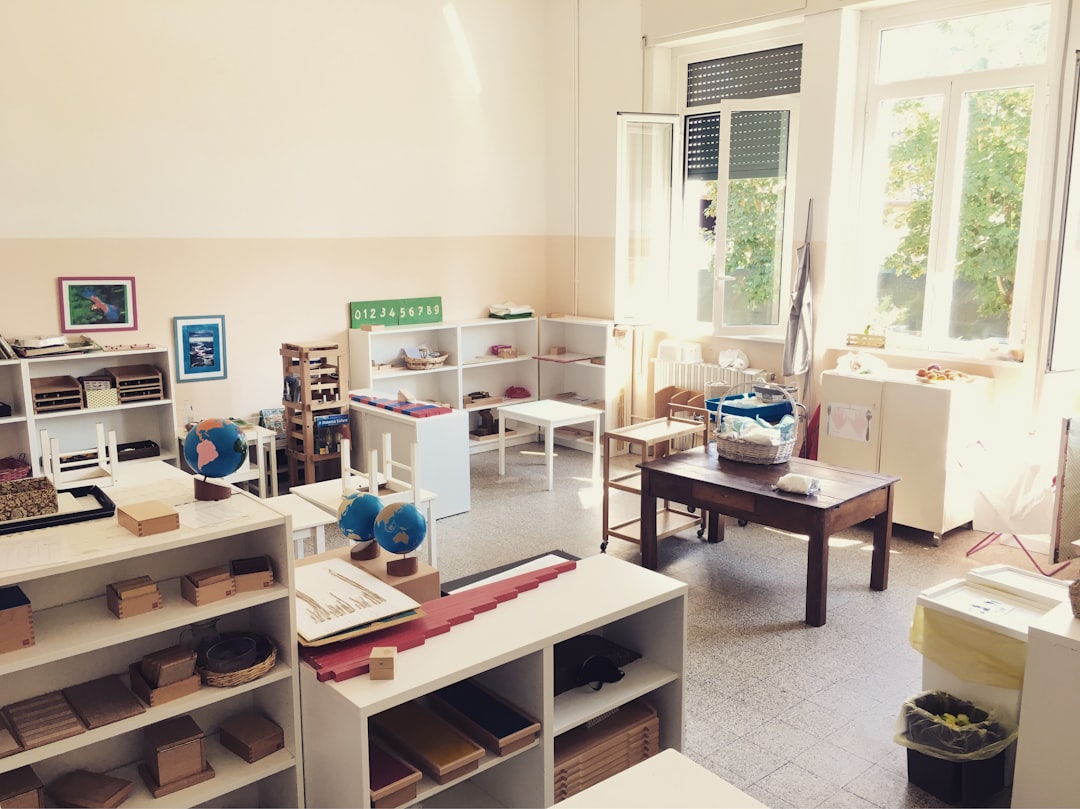
The prepared environment is much more than a nice classroom. It is a space designed down to the millimeter so that the child can act without constantly asking permission. In Montessori, every piece of furniture is at the right height and every material is within reach. There are no high shelves or objects beyond the child’s control.
This physical organization reduces dependence on the adult. The child knows where to find what they need and how to return it to its place. Thus, Montessori child autonomy is not a theoretical lesson. It is a daily practice lived from the very first minute in the classroom.
A prepared environment also includes the possibility of choice. Instead of imposing an activity, the child walks among the shelves and decides if today they want to work with numbers, paint, or take care of a plant. That freedom of choice is the engine of intrinsic motivation, another key trait of autonomy.
Moreover, external order fosters internal order. When a three-year-old cleans up a spill or places a tray on its shelf, they are building an image of themselves as a capable person. And that feeling extends to other areas of their life.
Elements that Turn a Classroom into an Engine of Independence
A prepared environment does not happen by chance. It requires careful selection of furniture, materials, and routines. These are the ingredients we observe in the IMS Sotogrande classrooms:
- Child-sized furniture: lightweight tables and chairs that children can move according to their activity, open shelves at their height.
- Materials ordered by difficulty: from left to right and from simple to complex, facilitating autonomous choice.
- Thematic corners: practical life area (pouring, cleaning), sensorial, language, mathematics, art, and nature, all visible and accessible.
- Calm space: a corner with cushions and plants where the child can relax without interference.
Last year, a 5-year-old student newly arrived at IMS Sotogrande barely dared to move around the classroom without constant adult approval. Two months later, with a prepared environment that offered her real autonomy, she was preparing her geometry tray and taking it to the work area by herself. Her mother told us that at home she no longer asked for help getting dressed. This is the power of an environment that trusts the child.

Montessori Materials: Tools for Child Autonomy
The materials are not toys. They are scientific tools that isolate a specific difficulty. For example, the dressing frames allow practicing buttons, zippers, or bows without the pressure of having to get dressed quickly. The child repeats until mastering the technique and, in the process, gains the confidence to dress themselves in the morning.
Practical life activities, like pouring liquids or sweeping, connect the child to their real environment. Instead of pretending, they participate for real. This reinforces Montessori child autonomy and their sense of belonging and responsibility. It is not uncommon to see a four-year-old preparing their snack or watering the classroom plants without anyone reminding them.
Sensorial materials, on the other hand, train the capacity for visual, tactile, or auditory discrimination. But they also foster intellectual autonomy. The child learns to self-evaluate without depending on external correction. If a pink tower is built incorrectly, the material itself shows the error.
That deep concentration, which Montessori called “normalization,” is proof that the child has reached a state of real independence. Observing a three-year-old who repeats the pouring of water twenty times, we understand that they are not playing: they are building their coordination, patience, and ability to focus. And that no adult can teach them; we can only offer the environment for it to emerge.
Error Control, a Silent Ally
Each Montessori material incorporates a self-correction system. The sound cylinders do not match if the grading is incorrect; the pink tower wobbles if a cube is out of place. The child does not need an adult to say “it’s wrong”: the error is objective information that they can interpret and correct themselves. This avoids humiliation and fosters real autonomy in problem-solving. At IMS Sotogrande, guides know that a “you did it all by yourself” is worth more than a hundred external corrections.

The Montessori Adult: Guide, Not Protagonist
For Montessori child autonomy to flourish, the adult must assume a radically different role from the traditional teacher. Instead of giving lectures, the guide observes, prepares the environment, and only intervenes when the child needs it or when they can show a new use of the material. The training of a Montessori guide includes hours of practice to master the art of not interrupting.
A common mistake is confusing observation with passivity. The guide is constantly evaluating: has this child chosen a task that is too easy or too difficult? Are they ready for a new presentation? Do they show signs of frustration? Based on that, they adjust the environment or invite the child to a greater challenge. It is a subtle dance between presence and withdrawal.
Strategies for Families Seeking Consistency at Home
Autonomy does not turn off when leaving school. Parents can replicate many principles at home with small changes. Here are practical ideas we recommend at IMS Sotogrande:
- Place clothing within the child’s reach: low drawers, a shoe rack at their height.
- Allow them to participate in the kitchen: cutting soft fruits with safe utensils, setting the table, pouring water.
- Create visual routines: a board with pictures of the morning sequence (washing, dressing, having breakfast) that the child can follow without asking.
- Resist the impulse to help: if the child is trying to tie their shoes, count to 30 before offering assistance.
An anecdote: a father told us that since his 4-year-old son has a low shelf with his breakfast utensils, every morning he prepares his bowl of cereal without asking for permission. The child is so proud that now he also clears the table after eating.
Autonomy Beyond Academics: Emotional and Social Development
When we talk about Montessori child autonomy, we are not only referring to the ability to dress or work alone. Emotional and social independence is equally crucial. In a Montessori classroom, children of different ages coexist and learn to resolve conflicts with tools like the peace table, where two children can sit and talk about what bothered them without immediate adult intervention.
Additionally, lessons of grace and courtesy teach how to apologize, wait for a turn, or ask for help without interrupting. All of this builds an autonomy in relationships that many adults would envy. A Montessori child is not afraid to express their needs because they know they will be heard.
A Real Case: How Autonomy Transformed a Shy Student
Two years ago, Lucia arrived at IMS Sotogrande at age 4. She was extremely shy: she wouldn’t speak unless directly asked and would hide behind her mother at the entrance. Her guide, after a few weeks of observation, perceived that Lucia felt overwhelmed by direct interaction. She decided to present the sensorial materials one by one, during calm moments, without forcing communication. Little by little, Lucia began to work alone with the sound cylinders, then with the pink tower. When finished, her guide would just smile and nod. A month later, Lucia approached a classmate to show how she had completed the brown stairs. That spontaneous gesture was her first step towards autonomous social interaction. Today, at 6, she is one of the students who welcomes visitors to the classroom. Emotional autonomy opened the door to the world for her.
Autonomy Throughout the Planes of Development
In Montessori, independence takes different forms according to the stage. In the first plane (0-6 years), it focuses on control of the body and the immediate environment: dressing, eating, toilet learning, choosing work. In the second plane (6-12 years), the child seeks intellectual and moral independence: they want to explore the universe, understand justice, work in groups without constant supervision. In adolescence, autonomy leaps towards the social and economic: Montessori adolescents manage real projects, from a garden to a small business.
IMS Sotogrande accompanies the entire first plane (from 0 to 6 years) and plans to extend its project through adolescence with the Earth School program, where young people will develop full autonomy by managing their learning community.
Frequently Asked Questions
At what age do children start showing autonomy in Montessori?
From birth. In the Nido (from 4 months to 18 months), babies move freely, choose among various sensorial materials, and participate in basic self-care routines, such as washing their hands. Autonomy is innate; the environment just needs to respect it.
How to know if a prepared environment is effective?
A clear indicator is concentration. If children work for long periods without interruptions, the environment is working. It is also noticeable in self-correction: a child who repeats an activity until mastering it demonstrates that the environment offers the right challenge and sufficient autonomy.
Can Montessori autonomy be applied at home with children with special needs?
Yes, with adaptations. The principle is the same: offer opportunities for independent action suited to their abilities. At IMS Sotogrande we have attended children with diverse needs, and we always start from their strengths, not their limitations. For example, a child with reduced mobility can choose among work trays adapted to their reach. Autonomy is a right, not a privilege.
Key Conclusions
Montessori child autonomy is a daily conquest supported by three pillars: a prepared environment that invites action, materials with error control that foster self-esteem, and an adult who observes without interfering. When these elements align, the child develops an independence that goes far beyond the practical: it encompasses the emotional, the social, and the intellectual.
If you are looking for an education that respects your child’s pace and prepares them for life with confidence and determination, we encourage you to visit IMS Sotogrande. Our classrooms are the best testimony that another educational model is possible. There is no need to wait until they are older; autonomy starts today.









