Montessori Baby Toys: A Practical Guide for Families

Montessori baby toys are not a luxury: they are simple, wooden objects designed for your child to explore with their senses. In this guide, I explain what materials Montessori guides choose and how to adapt them to each stage without overspending.
Key Points
- Montessori baby toys prioritize wood, neutral colors, and real sensory stimuli.
- You don’t need to buy many: a handful of well-chosen materials surpasses dozens of plastic toys with lights.
- The goal is not to entertain, but to invite concentration, coordination, and autonomy from the crib.
- The exact age matters less than observing the child: each little one has their own pace.

What Are Montessori Baby Toys?
Montessori baby toys are real, attractive, and safe manipulation objects that invite the baby to use their hands, mouth, and eyes to understand their environment. Unlike a toy that emits sounds and lights, these materials do nothing on their own: they require the child’s action. According to the Association Montessori Internationale (AMI), a well-designed material isolates a specific difficulty, such as grasping, fitting, or stacking, and allows repetition without boredom.
What Makes Montessori Baby Toys Different?
The main difference lies in simplicity and realism. A conventional toy often competes for the child’s attention with colors, buttons, and sounds. In contrast, a Montessori toy respects the need for calm: a cloth ball, a wooden rattle, or a teething ring offer a single sensory experience. Thus, the baby is not distracted by passive stimuli and can concentrate on what their body is doing.

How to Choose Montessori Baby Toys by Age
Choosing well does not mean buying everything labeled Montessori. First, observe what your child needs at each developmental plane. Before 6 months, reflexes and hand-eye coordination predominate. Then, sitting changes perspective and the desire to reach objects begins. From 12 months, walking and fine motor skills open the way to puzzles and towers.
Book a personalized visit to the school: Book a personalized visit to the school.
0 to 6 Months: Materials for Looking, Touching, and Teething
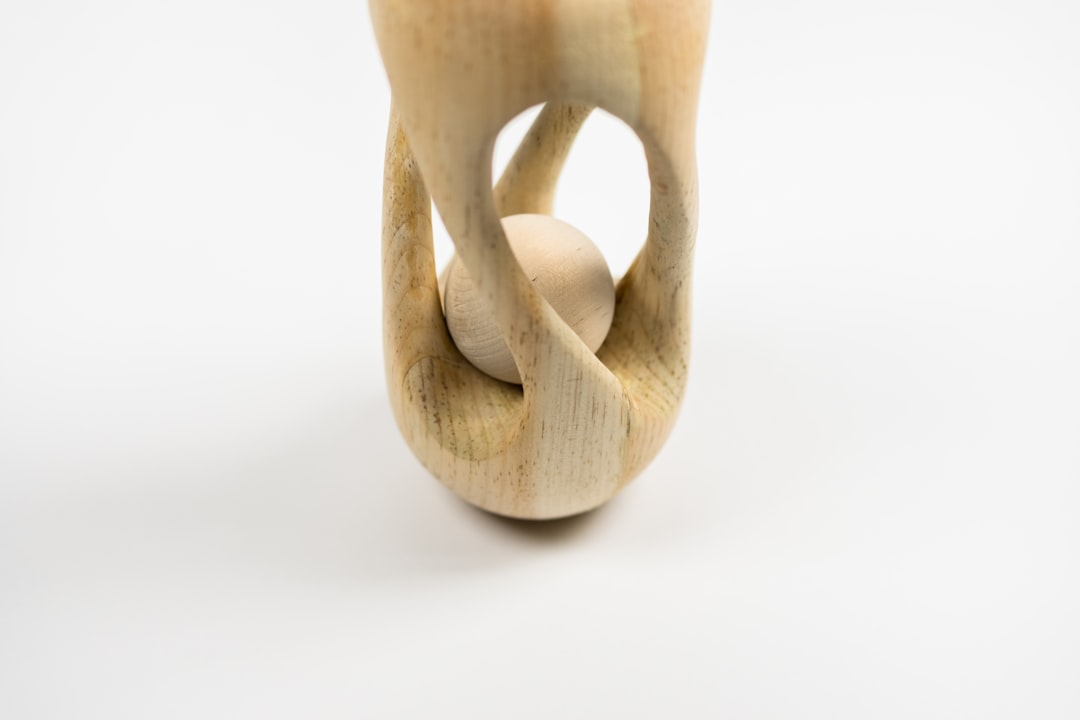
At this stage, the baby needs visual contrasts, soft textures, and easy-to-grasp objects. A Montessori mobile with geometric figures, a wooden rattle with an internal bell, or a cloth teething ring are perfect examples. Additionally, placing the baby on their tummy on a blanket with different fabrics strengthens the neck and back.
6 to 12 Months: The Awakening of the Pincer Grasp
When they manage to sit, babies start using the pincer grasp with thumb and index finger. Therefore, a treasure basket with real household objects (a wooden spoon, a piece of cloth, a small jar) gives them more than a noisy toy. Sensory balls and stacking rings of cloth or wood also help coordinate both hands.
12 to 18 Months: First Puzzles and Autonomy
At this age, walking stabilizes and hands want to work with precision. Simple shape puzzles, object permanence boxes, and first knobbed puzzles are ideal. Even safe household tasks, like putting clothes in a basket, become Montessori play at no cost.

The Best Montessori Materials by Stage
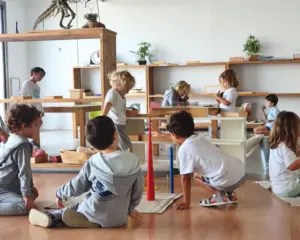
You don’t need a room full of shelves. With these five materials spread across ages, you’ll cover your baby’s main needs. If you live in Sotogrande or Campo de Gibraltar, you can see them in action in the Nido and Children’s House environments at IMS during a visit.
Here is a brief list:
- Gobbi mobile or figure mobile (0-3 months).
- Wooden rattle with bell (3-6 months).
- Treasure basket (6-12 months).
- Wooden stacking rings (8-12 months).
- Object permanence box with ball (10-18 months).
Common Mistakes When Choosing Montessori Baby Toys
The most frequent mistake is confusing aesthetics with pedagogy. A wooden block painted pink is not Montessori if it doesn’t respect the child’s size, weight, and proportion. Another common error is saturating the space: more than four or five toys in sight hinders concentration. Likewise, many parents believe Montessori prohibits plastic, when in reality it’s about offering materials pleasant to the touch and with a clear purpose.
The American Academy of Pediatrics reminds that babies learn better with face-to-face interactions and objects they manipulate, not with screens or electronic toys. Thus, a wooden bowl with a spoon can be more educational than a colorful tablet.
Frequently Asked Questions
From What Age Can Montessori Toys Be Used?
From birth, with visual and grasping materials. Babies from 0 to 3 months benefit from contrast mobiles and soft objects to follow with their eyes. As they master grip, rattles and wooden teethers are introduced. There is no fixed age: the key is to observe each child’s interest and coordination.
What Montessori Materials Are Essential for a 6-Month-Old Baby?
A wooden rattle, a cloth sensory ball, a natural teether, and a basket with real everyday objects. These four materials cover grasping, wrist rotation, oral exploration, and the start of the pincer grasp. You don’t need to spend more than 30 euros to set up a complete play corner.
Are Plastic Toys Banned in Montessori?
They are not banned, but noble materials like wood, cloth, metal, or wicker are preferred. Plastic is often lightweight, cold, and without interesting texture, which reduces sensory information. However, a hard plastic scoop inside a treasure basket can be perfectly valid if the child chooses it.
Key Conclusions
Montessori baby toys are tools that respect each child’s pace, not an Instagram trend. Prioritize quality over quantity, wood over noise, and observation over the instruction manual. With a handful of well-chosen materials, your baby will develop concentration, coordination, and autonomy from the first months.
If you want to see how this philosophy is applied in a real environment, come and visit our Nido and Children’s House spaces at IMS Sotogrande. It doesn’t matter if you’re just starting to learn about Montessori or already know it: Book a personalized visit to the school and see for yourself.