
Montessori Educational Games for 7-Year-Olds: 15 Ideas That Really Work

Montessori educational games for 7-year-olds combine fun and active learning in a crucial developmental stage. At this age, children solidify logical thinking, expand their vocabulary, and begin to reason more abstractly. Choosing the right games makes the difference between passive entertainment and an experience that strengthens their autonomy, curiosity, and problem-solving skills.
- Key Points on Montessori Educational Games for 7-Year-Olds
- Why Montessori Educational Games for 7-Year-Olds Make a Real Difference
- Examples of Montessori Educational Games for 7-Year-Olds by Learning Area
- How to Apply the Montessori Approach at Home with Educational Activities
- How to Choose Educational Games That Really Work
- Frequently Asked Questions
- Key Takeaways
Key Points on Montessori Educational Games for 7-Year-Olds
- At age 7, children transition from sensory learning to logical reasoning, so educational games for 7-year-olds should challenge without frustrating.
- Manipulative materials (blocks, Cuisenaire rods, board games) stimulate more than interactive apps.
- Montessori pedagogy suggests activities with a clear goal, real materials, and freedom within a structured framework.
- Free play remains essential: not everything has to be “didactic” to be valuable.
- At IMS, we accompany each child at their pace, integrating educational activities in the Taller (6-12 years) classroom with certified AMI Montessori materials.

Why Montessori Educational Games for 7-Year-Olds Make a Real Difference
At age 7, there’s a notable cognitive leap. Children start to classify, order series, understand concepts like time or distance, and reason about causes and consequences. It’s no coincidence that Montessori pedagogy calls this stage Taller : children work on projects, investigate, and need materials that respond to their growing curiosity.
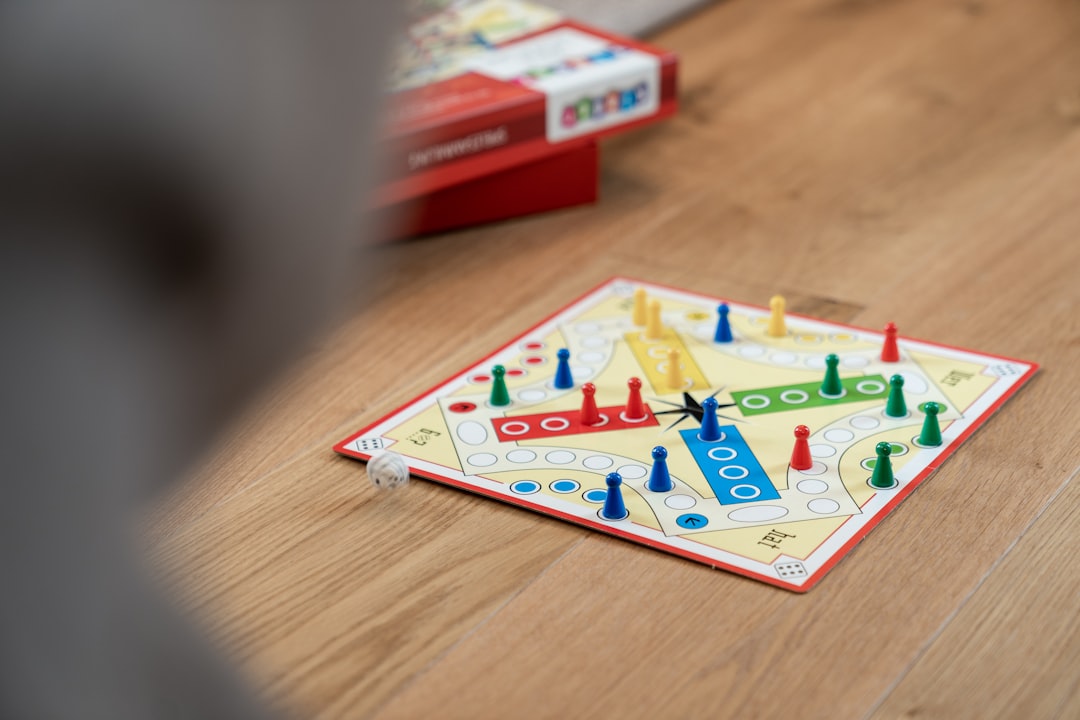
A good educational game for this age group meets three conditions: it has a clear learning objective, offers adjustable difficulty levels, and allows children to repeat or combine without getting bored. Family board games, science kits, free-building pieces, or geometry and concrete algebra materials fit this profile perfectly.
According to the American Academy of Pediatrics, active play remains the primary engine for cognitive and socioemotional development in middle childhood. It’s not about filling the afternoon with worksheets, but offering real opportunities to think, create, and make mistakes without fear.

Examples of Montessori Educational Games for 7-Year-Olds by Learning Area
Logical Thinking and Mathematics
Cuisenaire rods, fraction blocks, Tangram, and games like Blokus or Rush Hour train spatial reasoning and problem-solving. Construction kits with gears or card games like Dobble also work very well, developing processing speed.
Language and Communication
At age 7, children’s vocabulary expands spectacularly. Games like Dixit, Story Cubes, or Scrabble Junior encourage verbal creativity. Stories with open endings and free writing challenges (writing a letter, inventing a comic) are learning activities that fit perfectly at home.
Sciences and Exploration
Home experiment kits (volcanoes, electrical circuits, crystals) awaken the investigative spirit. Children’s microscopes, nature books with activities, or card games about animals and ecosystems are also highly effective educational play resources.
Fine Motor Skills and Art
Puzzles of 200-500 pieces, papier-mâché crafts, sewing games for kids, or clay modeling sets work on eye-hand coordination and patience. In the Taller classroom at IMS, children dedicate daily time to artistic activities as part of autonomous work.

How to Apply the Montessori Approach at Home with Educational Activities
At IMS, we work with materials certified by the Association Montessori Internationale, and many families ask us how to bring that spirit home. The key isn’t buying the exact material, but applying three principles:
- One material, one goal. Avoid toys that do too many things at once. A wooden rod teaches more than a tablet with twenty apps.
- Free and organized access. Place games on low shelves, labeled, so the child can choose and put away independently.
- Respect the work cycle. Let the child concentrate without interruptions. A 20-minute focused game is worth more than an hour of interrupted activity.
The most valuable educational activities are those children choose to repeat on their own initiative. If a puzzle fascinates them, let them assemble it ten times. That repetition isn’t boredom: it’s consolidation.
Would you like to see how we integrate these activities into the daily classroom routine? Book a personalized school visit and discover the Taller environment at IMS in Sotogrande.
How to Choose Educational Games That Really Work
Not all products labeled “educational” truly are. Before buying, ask yourself three questions: can the child manipulate it with their hands or is it just a screen? Does it allow multiple difficulty levels? Does it foster autonomy or require constant adult guidance?
The best didactic games for this age share a characteristic: they leave room for the child to make decisions. A building block doesn’t dictate what to do: it proposes. That freedom within a framework is exactly what defines the Montessori environment we nurture at our school in Sotogrande, minutes from La Línea, Algeciras, or Estepona.
Material also matters. Wood, metal, fabric, and paper activate more sensory connections than plastic. Montessori games use natural materials for a pedagogical, not aesthetic, reason: the weight of a wooden rod communicates a quantity differently than a drawing on cardboard.
Frequently Asked Questions
What is the best educational game for a 7-year-old?
There isn’t one best game, because each child has different interests. However, manipulative materials like Cuisenaire rods, geometry blocks, or strategic board games (Blokus, Ticket to Ride Junior) are consistently highly valued by Montessori guides and families. The important thing is that the game challenges without frustrating and that the child can repeat it at their own pace.
Are educational video games good for 7-year-olds?
Educational video games can contribute something, but they don’t replace manipulative play and direct contact with materials. At age 7, the brain needs to move, touch, build, and make mistakes with real objects. Screens can complement, but they shouldn’t dominate playtime. The AAP recommendation is to limit recreational screen time and prioritize active play.
What educational activities can I do at home without buying anything?
Many. Cooking together (measuring ingredients works on fractions), organizing the pantry by categories (classification), making puzzles from old magazines, inventing stories with word dice, or building towers with milk cartons. Educational play doesn’t need to be expensive: it needs intention. In the Taller classroom at IMS, we use simple and real materials daily.
Can a 7-year-old already play board games with complex rules?
Yes, most 7-year-olds can understand more elaborate rules, as long as someone explains them patiently and lets them make mistakes in the first few games. Games like Catan Junior, Kingdomino, or illustrated chess sets are designed for this age group. The key is to play with them, not leave them alone with the rulebook.
Key Takeaways
Montessori educational games for 7-year-olds truly work when they combine manipulation, progressive challenge, and freedom of choice. Prioritize real materials over screens, offer variety across areas (logic, language, sciences, art), and respect the child’s pace: repeating a game they’re passionate about is more valuable than jumping from activity to activity.
If you want to discover how a certified AMI Montessori environment enhances your child’s active learning, visit us at IMS Sotogrande. We’re minutes from the entire Campo de Gibraltar and Costa del Sol area, with trilingual programs from 0 to 12 years and a team that accompanies each family closely and professionally.
Viviane Dumont, Director of Studies at International Montessori School Sotogrande.









