Montessori Screen Time Guide for Families in Sotogrande: Children Aged 0-6
In short
As part of our Montessori screen time guide for families in Sotogrande, we address how screen time for children aged 0-6 has become a major concern for families in Sotogrande and the entire Campo de Gibraltar area. It's no wonder.

As part of our Montessori screen time guide for families in Sotogrande, we address how screen time for children aged 0-6 has become a major concern for families in Sotogrande and the entire Campo de Gibraltar area. It’s no wonder. At this age, the brain is building its foundations, and every hour spent on a tablet reduces opportunities for movement, language, and real connection. Managing screen time for children 0-6 isn’t about prohibiting for the sake of it, but offering alternatives that nourish development. In this article, I explain what Montessori says, what the evidence shows, and how to set limits without living in constant conflict.
- Before age 2, medical recommendations are to avoid screens except for video calls.
- Between 3 and 6 years, the guideline is one hour a day of quality content, always accompanied.
- Montessori doesn’t demonize technology but keeps it out of early childhood classrooms.
- Your habits as an adult are the best predictor of your child’s screen use.
- Free play, symbolic play, and practical life activities effectively replace screen time.
- What Does the Montessori Method Say About Screen Time for Children 0-6 Years? A Guide for Sotogrande Families
- How to Manage Screen Time for Children 0-6 Without Guilt: Montessori Tips for International Families
- Frequently Asked Questions on Screen Time for Young Children
- Key Takeaways from Our Montessori Screen Time Guide
What Does the Montessori Method Say About Screen Time for Children 0-6 Years? A Guide for Sotogrande Families
Montessori doesn’t ban technology but does keep it out of the early years. For a child aged 0-6, development depends on sensory activity, movement, and human interaction. Screens, even with educational apps, cannot replace these experiences. Therefore, the debate isn’t about whether technology is good or bad, but whether it offers something a child can’t gain with their own hands. When it comes to Montessori screen time guide, it pays to listen to what families and lead guides actually report.
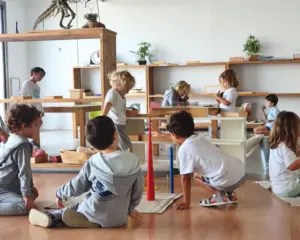
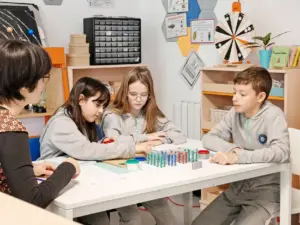
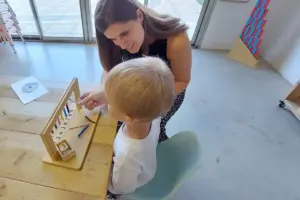
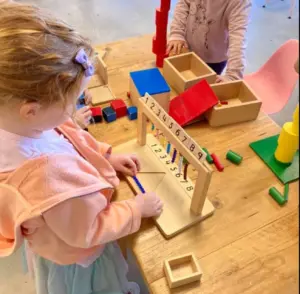
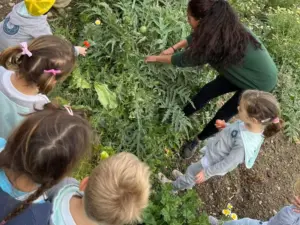
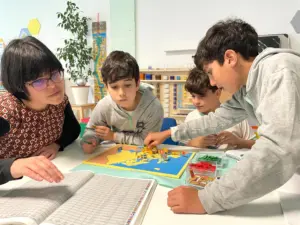
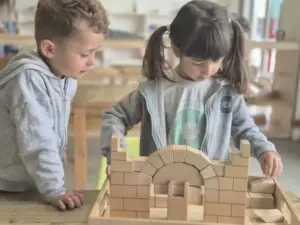
In the Nido (0-3 years) and Children’s House (3-6 years) at IMS Sotogrande, there are no screens. Not because we’re radical, but because every minute of the day has a purpose: caring for plants, preparing food, organizing materials, conversing with peers. These activities develop concentration, fine motor coordination, and vocabulary in ways no app can replicate. Daily practice with Montessori screen time guide reveals nuances no handbook fully captures.
Screen Exposure in Childhood: What the Evidence Says
Screen exposure in childhood has measurable effects on sleep, attention, and language. The American Academy of Pediatrics recommends avoiding screens before 18-24 months, except for video calls. Between ages 2 and 5, the guideline is one hour daily of high-quality content. This isn’t an outdated stance: it’s the conclusion of decades of studies on brain development. Understanding Montessori screen time guide from inside the classroom reshapes everyday decisions.
A study published in JAMA Pediatrics in 2019 found that children aged 3-5 with more screen time showed lower language development and worse executive function. Therefore, screen exposure in childhood should be assessed not just in minutes, but in quality. In Montessori, we reach the same conclusion through another path: young children learn by manipulating, not watching.
Ages 3 to 6: One Hour of Screen Time
From age 3, the general recommendation increases to a maximum of one hour daily. But not just any hour. Screen time should be calm, without abrupt cuts, and preferably shared with you. An episode of a quiet show while you prepare dinner isn’t the same as a fast-reward video game.
However, the Association Montessori Internationale reminds that the child should be an active participant, not a passive consumer. Screen time should not steal hours from sleep or free movement. That’s why, at IMS Sotogrande, we don’t use screens in Nido or Children’s House.
Technology in Early Childhood Is Not a Neutral Toy
Technology in early childhood isn’t neutral because it competes with experiences that build the brain. While a child watches a screen, they’re not running, talking, or solving problems with real objects. Many so-called educational apps only reinforce quick responses and instant gratification. That’s not learning. It’s passive entertainment.
Moreover, the blue light emitted by screens disrupts melatonin production. This delays sleep onset and reduces its quality, especially relevant for ages 0-6 when the brain needs 10-14 hours of rest depending on age. Technology in early childhood might have a place as an occasional tool, but never as a substitute for free play.

How to Manage Screen Time for Children 0-6 Without Guilt: Montessori Tips for International Families
You can manage screens without turning your home into a war zone. The key lies in clear agreements, predictable routines, and consistency between what you say and do. Children learn from what they see at home. If you want your child to avoid screens, turn off yours during interaction times.
Set clear schedules and stick to them. If you use a tablet during meals one day, you break the rule. Consistency isn’t rigidity. It’s predictability. There’s no need to ban. Just ensure technology isn’t the main activity.
Real Alternatives That Work at Home
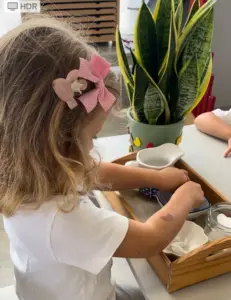
Offering alternatives doesn’t mean inventing impossible activities. A 2-year-old is happy pouring water from one jug to another. A 4-year-old can sort screws by size or prepare their own snack. Practical life is a great ally: sweeping, setting the table, watering plants.
Other specific options to replace screens for children aged 0-6:
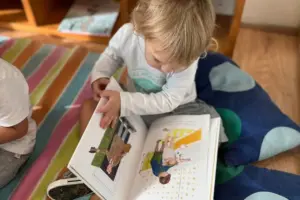
- Textured books for babies and wordless picture books for toddlers.
- Sensory play: flour, water, sand, homemade playdough.
- Movement circuits with cushions, tunnels, and ramps.
- Outdoor time: park, garden, a walk along Sotogrande beach.
- Symbolic play with dress-up, toy kitchens, or dolls.
When Other Children Use Screens
It’s common at birthdays or family gatherings for other children to use devices. Your child might ask why they do and he doesn’t. The most honest answer is simple: “In our family, we choose to play differently.” You don’t need to criticize other families or give long explanations. Just maintain your rule naturally and offer something attractive at that moment: a game, a craft, or simply running together in the garden.

Frequently Asked Questions on Screen Time for Young Children
At what age can my child start watching screens?
The official recommendation is to avoid screens before 18-24 months, except for family video calls. At this age, the brain needs real human contact, movement, and tactile exploration to develop. Screens offer nothing a child can’t get better by playing with you or with real objects.
Do educational apps help with learning in early childhood?
Most apps labeled as educational only train quick responses and immediate rewards, not deep thinking. A 3-year-old learns more vocabulary by cooking with you than by watching a color video. Human interaction and manipulation of real objects are always superior at this stage.
How do I remove screens if my child is already used to them?
Start by gradually reducing time and replacing each session with a concrete activity. Prepare materials in advance: playdough, books, a puzzle. Explain the new rule calmly and be consistent. The first days there may be protests, but within one to two weeks, the new routine will settle.

Key Takeaways from Our Montessori Screen Time Guide
Screen time for children aged 0-6 doesn’t need to be a family battlefield. With clear information, consistent limits, and real alternatives at hand, your child can grow up without technology occupying a place it shouldn’t. The Montessori method offers a proven framework: trust in the child’s ability to learn with their hands, their body, and their relationship with you.
If you live in Sotogrande, La Línea, Algeciras, or any point in the Campo de Gibraltar and want to learn how we work without screens in the classrooms at IMS, contact us. Seeing the prepared environment in action will give you more answers than any article.