Fostering Child Independence: Age-Based Tips & Examples | IMS Sotogrande

Fostering child independence isn’t about leaving a child to fend for themselves. It’s about giving them the tools to learn to trust their own abilities, step by step, with the right support. When a young child prepares their own snack or a seven-year-old organizes their backpack, they’re building the foundation of a confident and responsible person. In this article we explore fostering child independence Montessori in depth with practical examples.
At International Montessori School Sotogrande (IMS) we see this confidence blossom every day in our prepared environments. Our goal is the same as many families’: to unleash every child’s potential by respecting their individuality and pace. When it comes to fostering child independence Montessori, it pays to listen to what families and lead guides actually report.
Key points to remember
- Independence is a skill, not a personality trait. It’s taught and practiced with real opportunities.
- Every stage has its window. What’s appropriate at 18 months isn’t at 5 years, and vice versa.
- Mistakes are part of learning. A spilled glass teaches more than us always filling it for them.
- A prepared environment changes everything. If a child can reach and use what they need, they will act for themselves.
- Patience is our best tool. It will take more time at first, but the result is worth it.

Why fostering child independence changes development
Independence is much more than dressing oneself. When we foster child independence, we strengthen executive functions like planning, decision-making, and emotional self-regulation. A child who chooses their clothes in the morning is exercising the same mental muscle they’ll later use to solve a math problem. Daily practice with fostering child independence Montessori reveals nuances no handbook fully captures.
According to the Asociación Montessori Española, independence is one of the three pillars of development in Montessori pedagogy, along with concentration and coordination. It’s not an isolated goal: it’s the engine that drives the entire learning process. Understanding fostering child independence Montessori from inside the classroom reshapes everyday decisions.
At IMS, we observe that children who practice independence in the classroom and at home show greater resilience, better self-esteem, and a greater willingness to collaborate with others. They aren’t born this way. They become this way through practice and trust. Concrete data on fostering child independence Montessori is worth reviewing before acting on assumptions.

Examples of independence by age
It’s not about applying the same formula to everyone. A 15-month-old baby and a 9-year-old need very different challenges. The important thing is to offer the right challenge: new enough for them to learn, but achievable so they feel success.
From 0 to 3 years (Nido and Community Initiation)
At this stage, independence is built with tiny gestures. A baby bringing a spoon to their mouth is exercising independence. A 2-year-old hanging their coat on a low hook is showing they can contribute to caring for their environment.
Practical examples for home:
- Put a low coat hook and mirror in the entryway.
- Offer a real cup (plastic or silicone) instead of a bottle from about age one.
- Let the child try to put on their shoes, even if they put them on the wrong feet.
- Involve them in setting the table: let them put out their own plate or napkin.
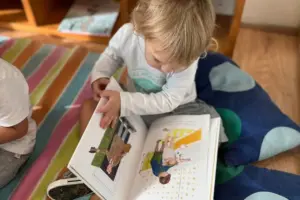
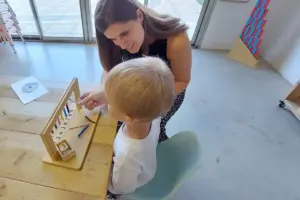
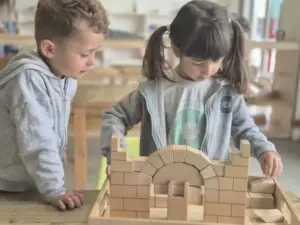
In the IMS Nido, materials are within the youngest children’s reach. There are no high shelves or toys out of reach. Everything is designed for each child to act for themselves from the very beginning.
From 3 to 6 years (Children’s House)
Here, independence grows exponentially. Children at this age want to do everything themselves and often succeed if we give them the chance. The key is preparing the environment so success is possible.
Examples to implement:
- An accessible food corner: cut fruit, water in a pitcher, napkins.
- Clothing with easy fasteners (velcro, elastic) so they can dress without help.
- A board and a plastic knife so they can cut their own fruit.
- A visual schedule with pictograms for the morning routine.
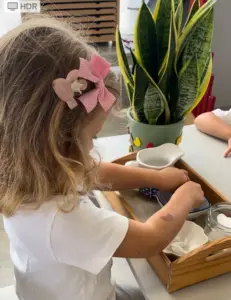
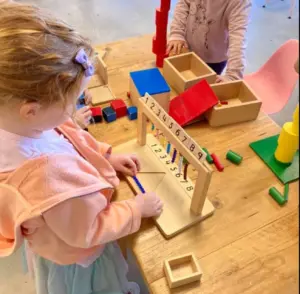
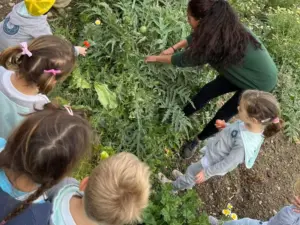
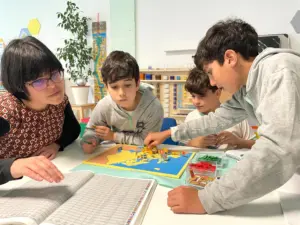
In the IMS Children’s House (3-6 years), children prepare their own lunch, clean their table, and care for classroom plants. It’s not an extra activity: it’s part of the day. This way, they internalize that contributing to the group is natural.
Book a personalized school tour to see how we foster independence in every environment.
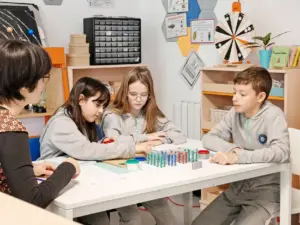
From 6 to 12 years (Workshop)
In the Workshop, independence connects to social responsibility. Children no longer just care for themselves: they organize group projects, manage their time, and resolve conflicts with concrete tools.
Examples for this stage:
- Let them organize their backpack the night before.
- Assign a real household chore: running the washing machine, cooking a simple dish.
- Allow them to manage a portion of their money (saving for a game).
- Support their personal projects without directing them.
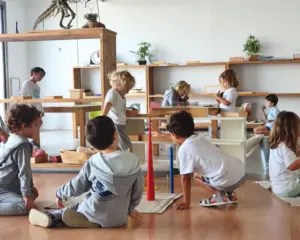
In the IMS Workshop (6-12 years), students plan their own work periods with guides. The adult doesn’t mark every minute: the child learns to prioritize. This responsibility is the foundation of the intrinsic motivation that is so hard to cultivate in adolescence.

The adult’s role: guide, not director
One of the biggest challenges in fostering child independence is changing our own role. We are not passive spectators nor directors who correct every move. We are guides who observe, prepare the environment, and offer help when asked.
In Montessori pedagogy, we call this “the prepared adult.” It’s not about doing less, but about doing it differently. Observing without intervening. Offering choices instead of orders. Respecting the child’s pace even if it’s hard for us to wait.
Three concrete changes you can make today:
- Instead of “Put on your shoes,” say: “Do you want to put on your shoes or your jacket first?”
- Instead of doing it for them, show them once and let them try.
- Instead of correcting the mistake immediately, ask: “What do you think happened? How can you fix it?”
These small changes transform family dynamics. The child goes from being a receiver of instructions to being the protagonist of their day.
How to prepare the environment at home
You don’t need to redecorate the entire house. A few simple changes in the spaces your child uses every day make an enormous difference.
Entry zone:
- Coat hook at their height (max 1 meter from the floor).
- A basket for their belongings (house keys, backpack).
- A low mirror so they can see their full body.
Kitchen:
- A learning tower or safe step stool to reach the sink and help prepare simple foods.
- Dishes and utensils their size, in a low, freely accessible cabinet.
- A drawer or shelf with healthy snacks they can serve themselves.
Play and work zone:
- A table and chair their size, free from distractions.
- Open shelves with a limited number of activities, organized by category.
- A defined space to store materials (pencils, clay, books).
Bedroom:
- A low bed or floor mattress so they can get in and out without help.
- A low dresser with visual labels for clothing.
- A quiet corner with cushions or a tent for reading or resting.
The premise is simple: everything the child needs to dress, eat, play, or tidy up should be within their reach and understandable to them. A well-prepared environment reduces power struggles, minimizes frustration, and invites them to act independently. When a child can navigate their environment on their own, their confidence grows and their internal motivation strengthens. We’re not seeking perfection, but opportunity. Allowing them to make mistakes is part of the learning process. The ultimate goal isn’t for them to do everything alone, but for them to feel capable of trying.