
Child Not Listening? Montessori Strategies for Parents | IMS Sotogrande
In short
When your child looks you in the eye and does the exact opposite of what you ask, the frustration is immediate. But a child not listening is not trying to annoy you: their brain is processing the world in a way that doesn’t yet align with our expectations. Understanding that difference changes everything.

When your child looks you in the eye and does the exact opposite of what you ask, the frustration is immediate. But a child not listening is not trying to annoy you: their brain is processing the world in a way that doesn’t yet align with our expectations. Understanding that difference changes everything. In this article we explore child not listening Montessori in depth with practical examples.
At IMS, we support families in the Campo de Gibraltar and Costa del Sol who face this situation every day. What we have seen in over twenty years of Montessori pedagogy is that defiance is almost never willful rebellion: it is a signal that deserves attention. When it comes to child not listening Montessori, it pays to listen to what families and lead guides actually report.
- A child who doesn’t listen is often communicating an unmet need or a normal developmental stage.
- Threats and shouting create temporary submission, not real cooperation.
- The prepared environment and mutual respect are the most powerful tools for fostering collaboration.
- Consistency between home and school multiplies the effectiveness of any strategy.
- Guiding without controlling is the Montessori principle that transforms defiance into autonomy.
- Why Your Child Won’t Listen: Reasons Beyond ‘Bad Behavior’
- What Neuroscience Says About Childhood Defiance
- How to Respond When Your Child Won’t Listen
- Common Mistakes That Make Defiance Worse
- The Role of the Prepared Environment in Cooperation
- How Defiance is Addressed in the IMS Montessori Classroom
- Frequently Asked Questions
- Key Takeaways
Why Your Child Won’t Listen: Reasons Beyond ‘Bad Behavior’
The primary cause of childhood defiance is neurological development. The prefrontal lobe, responsible for impulse control and planning, does not fully mature until age 25. At ages 3 or 4, when we hear ‘no’ most at home, that brain area is still under construction. Daily practice with child not listening Montessori reveals nuances no handbook fully captures.
Therefore, when a Children’s House child ignores your request to pick up toys, it’s not calculated defiance. Their brain simply prioritizes play, which is their primary way of learning, over a verbal instruction they don’t yet process as urgent. Understanding child not listening Montessori from inside the classroom reshapes everyday decisions.
Additionally, emotional factors amplify defiance. Hunger, tiredness, routine changes, or a previous conflict at school can block a child’s capacity to respond. An exhausted child at 6:00 PM lacks the neurological resources to listen, even if they want to. Concrete data on child not listening Montessori is worth reviewing before acting on assumptions.
Moreover, how we give instructions matters greatly. ‘Pick up now!’ generates resistance. ‘Would you like to put away the crayons first or the books?’ invites cooperation because it offers control within a clear limit.

What Neuroscience Says About Childhood Defiance
Educational neuroscience has shown that constant threats activate a child’s stress system (amygdala), further reducing their ability to listen. A study published by the American Academy of Pediatrics indicates that repeated physical and verbal punishment is associated with increased, not reduced, behavior problems.
In contrast, when the adult regulates their own emotional response before acting, the child has a model for self-regulation. This isn’t about being permissive. It’s about being firm without losing composure, because a dysregulated adult cannot teach a child to self-regulate.
The Asociación Montessori Española notes that children raised in respectful environments develop self-regulation skills earlier. Not because obedience is demanded, but because they are offered the opportunity to practice real choices within clear limits.

How to Respond When Your Child Won’t Listen
Step 1: Connect Before You Correct
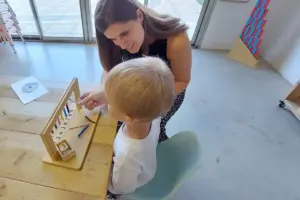
Before giving an instruction, make sure your child is truly listening. Get down to their physical level, make eye contact, and say their name calmly. ‘Lucas, I need you to look at me for a moment.’ This activates their attention before they process the request.
Step 2: Use Short, Positive Phrases
A 4-year-old cannot process, ‘If you don’t pick up the toys right now, there will be no park this afternoon because I’ve told you three times already.’ Instead: ‘The toys go in the box. Then we’ll go to the park.’ The instruction is clear, positive, and free of verbal noise.
Step 3: Offer Choices Within Limits
‘Would you like to set the table or put out the glasses?’ Both options lead to the same outcome, but the child feels they are participating in the decision. This strategy is central to Montessori pedagogy and reduces resistance because the child feels respected, not controlled.
Step 4: Hold the Boundary Naturally
If the child doesn’t clean up after the request, don’t repeat it five times. Say once: ‘If the toys aren’t in their place before dinner, they won’t be available tomorrow.’ And follow through without anger. No empty threats. A natural consequence teaches more than a thousand lectures.
If you want to see how we apply these strategies in the classroom, book a personalized school visit and observe the Montessori environment firsthand.

Common Mistakes That Make Defiance Worse
Repeating the instruction ten times is the most frequent error. Each repetition teaches the child that the first time doesn’t matter. If you say ‘come here’ and nothing happens, don’t repeat it. Approach, make visual contact, and repeat once with gentle firmness.
Another mistake is shouting instructions from another room. ‘Wash your hands!’ from the kitchen doesn’t work because the child doesn’t see your face or tone. Effective communication requires physical presence.
At IMS, we see daily that children who ‘don’t listen’ at home cooperate perfectly in the classroom. The difference? The environment is prepared so the child can act with autonomy, and requests are coherent with their developmental level. There are no shouts or threats: there are clear expectations and adults who guide with respect.
The Role of the Prepared Environment in Cooperation
Montessori discovered something simple and powerful: if the environment is designed for the child, defiance decreases because you don’t have to ask them to do impossible things. A low shelf where they choose their own material. A coat hook at their height where they hang their jacket. A visual calendar with the day’s routines.
You can apply the same at home. If your child won’t dress themselves, perhaps the wardrobe is too high or the clothes are difficult to put on. If they won’t tidy up, perhaps the drawers are overflowing and they don’t know where things go. Defiance is sometimes just an environment that doesn’t facilitate autonomy.
The Association Montessori Internationale emphasizes that the adult should observe before intervening. Often, adjusting the environment resolves the conflict without needing any ‘you must do’.
How Defiance is Addressed in the IMS Montessori Classroom
In our Nido (0-3 years), babies and toddlers explore freely within a safe space. There are no constant orders because the environment already guides their behavior. If something isn’t accessible, it simply isn’t in reach.
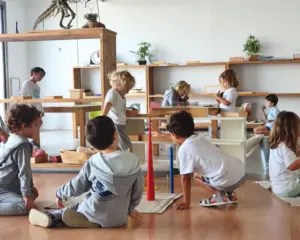
In Children’s House (3-6 years), children choose their work from the shelves, do it for as long as they need, and return it when finished. The morning structure (three-hour work cycle) reduces conflicts because the child is engaged in meaningful activity.
In Taller (6-12 years), the community largely self-regulates. Children participate in creating the rules of coexistence. When a boundary is crossed, it is addressed in circle time, not with individual punishment. This teaches collective responsibility in a way imposition never achieves.
All our guides are certified by the Association Montessori Internationale (AMI), ensuring the strategies they use are backed by decades of pedagogical research.
Frequently Asked Questions
Is it normal for my 3-year-old to say ‘no’ to everything?
Yes, it is completely normal and healthy. Between ages 2 and 4, the child develops their sense of autonomy, and saying ‘no’ is their way of testing limits and asserting their identity. It’s not defiance in the adult sense: it’s a developmental milestone that deserves patience and clear limits.
What do I do when my child challenges me in front of others?
Don’t enter a power struggle in public. Stay calm, get to their level, and say quietly, ‘We’ll talk about this in a moment.’ Then, in private, address the situation without humiliation. The message should be ‘your behavior needs adjusting’, never ‘you are bad’.
Does the Montessori method allow children to do whatever they want?
No. Montessori is based on ‘freedom within limits’. The child chooses from options the adult has previously prepared. They can choose what work to do, but they cannot hit another child or destroy materials. Limits are clear, consistent, and applied with respect, not fear.
When should I worry about my child’s defiance?
If disruptive behavior is constant for months, interferes with their social relationships, learning, or sleep, and doesn’t respond to any respectful strategies, consult a professional. There may be factors like anxiety, ADHD, or sensory difficulties that require specialized evaluation.
Key Takeaways
A child not listening is, in most cases, communicating something they need help expressing. The causes are usually a combination of immature neurological development, a non-facilitating environment, and communication styles that generate resistance instead of cooperation. Montessori pedagogy offers concrete tools: observe before intervening, prepare the environment, offer choices within limits, and remain calm as a regulated adult who guides, not controls.
If you recognize these situations in your daily life, start with something small: tomorrow, instead of repeating an instruction three times, approach your child, look into their eyes, and give a single clear request with a choice. Observe what changes. And if you want to see how a Montessori environment transforms coexistence with children, book your visit to IMS Sotogrande and discover it in person.