
Choosing an International School in Sotogrande: A Guide for Expat Families
In short
Deciding where to educate our children is one of the most important decisions we make as families. When you live in the Campo de Gibraltar or on the Costa del Sol and are looking for an international school in Sotogrande, the question isn’t just ‘which one is closest?’, but ‘which one aligns with the philosophy we want for our family?’.

Deciding where to educate our children is one of the most important decisions we make as families. When you live in the Campo de Gibraltar or on the Costa del Sol and are looking for an international school in Sotogrande , the question isn’t just ‘which one is closest?’, but ‘which one aligns with the philosophy we want for our family?’. In this article we explore international school Sotogrande in depth with practical examples.
- Active pedagogy, like the Montessori method, fosters autonomy and critical thinking from the earliest years.
- A safe environment and a family-like community influence a child’s development as much as the academic curriculum.
- True bilingual immersion (Spanish-English) in the early years is the foundation for fluency in primary school.
- International accreditations (AMI, NEASC) guarantee rigorous, recognized pedagogical standards.
- What it means to choose a school in Sotogrande that respects your child’s pace
- Safe environment and community: what makes a difference in Sotogrande
- Real bilingualism: beyond English class
- Active pedagogy vs. traditional education: which to choose?
- Logistics and family life: what you can’t ignore
- Frequently Asked Questions
- Key Takeaways
What it means to choose a school in Sotogrande that respects your child’s pace
Not all schools operate the same way. A school with Montessori pedagogy, for example, respects each child’s sensitive periods. This means a three-year-old who shows interest in numbers can work with concrete materials, while another who prefers language has access to stories and phonetic games. There is no single path for everyone . When it comes to international school Sotogrande, it pays to listen to what families and lead guides actually report.
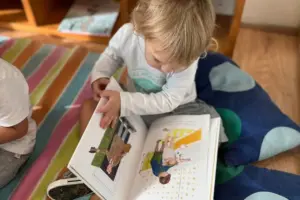
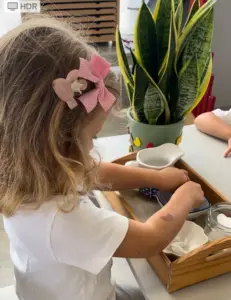
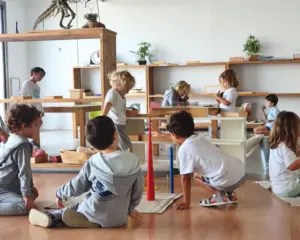
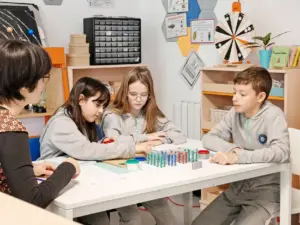
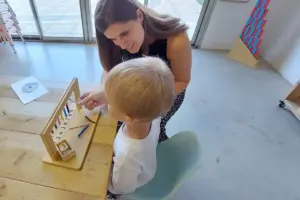
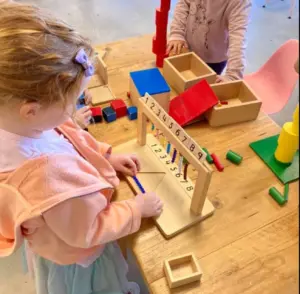
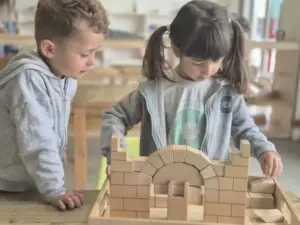
At IMS Sotogrande, each Children’s House classroom (ages 3-6) offers a prepared environment where materials are within the child’s reach. There are no desks in rows, but open shelves with activities that invite choice. This fosters deep concentration, a skill many traditional schools work on in a more rigid way. Daily practice with international school Sotogrande reveals nuances no handbook fully captures.
If you’re looking for a school in Sotogrande that doesn’t limit learning to memorization, look at how they organize their classrooms. Is there space to move? Can children choose their activities? Do teachers act as guides or as instructors? These questions will tell you more than any brochure. Understanding international school Sotogrande from inside the classroom reshapes everyday decisions.

Safe environment and community: what makes a difference in Sotogrande
Sotogrande is a privileged setting: safe, tranquil, and with a quality of life that attracts both local and international families. But a school is more than its geographical location. The educational community is as important as the building . Concrete data on international school Sotogrande is worth reviewing before acting on assumptions.
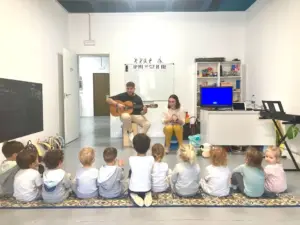
Ask yourself: does the school organize family meetups? Are there periodic tutorials where you can speak with the guides? Is there open communication with parents? At IMS, for example, families receive weekly reports every Friday and have at least three tutorials per year. Additionally, there are workshops like “Acompañando-té” and “La familia en tribu” that create genuine bonds between parents and educators.
A school in Sotogrande that functions as a community, not a cold institution, transforms the educational experience. Children feel safe and families feel supported. This is especially valuable for families moving to the area who are looking to build support networks.
If you want to see firsthand how this community works, book a personalized school visit and experience the atmosphere for yourself.

Real bilingualism: beyond English class
Many schools claim to be bilingual, but not all offer authentic immersion. A school in Sotogrande with dual Spanish-English immersion means children receive stimuli in both languages throughout the day, not just during one “English class” hour.
At IMS, immersion is natural: one guide speaks Spanish and another English in the same classroom. Children absorb both languages organically, as they would in a bilingual family. Additionally, French is offered from Children’s House (ages 3-6), preparing little ones for an increasingly multilingual world.
Neuroscience confirms it: the child’s brain is especially equipped to acquire languages before the age of six. A school that leverages this window of opportunity doesn’t just teach languages, but develops executive functions like attention, cognitive flexibility, and problem-solving.
What accreditations should an international school have?
Accreditations are not decorative seals. The AMI (Association Montessori Internationale) guarantees that guides are trained according to Dr. Montessori’s standards and that the materials are authentic. The NEASC (New England Association of Schools & Colleges) endorses academic quality with international recognition. In Spain, the Junta de Andalucía certifies regulatory compliance.
A school in Sotogrande that combines these three accreditations offers something uncommon: pedagogical rigor, global recognition, and legal compliance. This is crucial if your family is international and you need studies to be valid in other countries. You can learn more about Montessori accreditations on the official AMI website and about international standards on the NEASC page.

Active pedagogy vs. traditional education: which to choose?
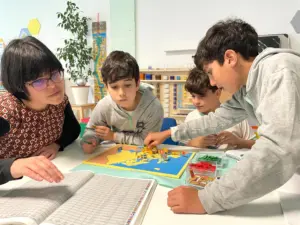
The fundamental difference between a Montessori school and a traditional one isn’t the content, but the approach. In a traditional classroom, the teacher explains and the children listen. In a Montessori classroom, the children investigate and the guide observes . This doesn’t mean there’s no structure: there is, but it’s in service of the child.
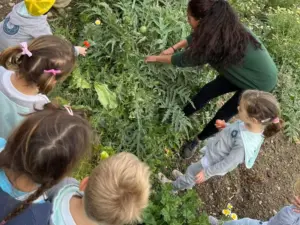
At IMS, children in the Elementary program (ages 6-12) work on long-term projects, research topics autonomously, and present their discoveries to the group. This develops skills the current job market demands: teamwork, communication, critical thinking, and creativity. AMI documents how these methods improve long-term academic and socio-emotional outcomes.
It’s not about demonizing traditional education. It’s about asking yourself what you want for your child. Do you want them to memorize for an exam or understand the ‘why’ behind things? Do you want them to raise their hand to speak or to learn to manage their time? The answers will guide you to the school in Sotogrande that best aligns with your family.
Logistics and family life: what you can’t ignore
An excellent school that’s 45 minutes away by car can become a burden on family life. Proximity matters, but it’s not the only factor . Does the school offer flexible hours? Is there an option to extend the day until 5:00 PM? Does it have a dining hall with a balanced diet?
At IMS, programs run from 9:00 AM to 5:00 PM with extensions, and all include a balanced diet. This facilitates work-life balance for working families. Furthermore, the campus is located in Sotomarket, above Mercadona, with direct access from the A-7/AP-7 motorway. Families from La Línea, Algeciras, Estepona, or Gibraltar find in IMS a school in Sotogrande that is worth the commute for the educational quality.
Don’t underestimate the impact of daily logistics. A school that adapts to your family’s rhythm, and not the other way around, reduces stress for everyone and leaves more energy for what matters: enjoying your children.
Frequently Asked Questions
What ages does the IMS school in Sotogrande cover?
IMS offers programs from 4 months (Seeds) to 12 years (Elementary 2). This includes Nido (0-3 years), Children’s House (3-6 years), and Elementary (6-12 years). Teenagers have continuity options at other Montessori centers. Trilingual education (Spanish, English, and French) begins from the earliest years.
Is a Montessori school suitable for children with special needs?
Yes, the Montessori method is based on respecting each child’s individual pace. At IMS, there is also a specialized Rainbow Classroom for diversity and special educational needs. This classroom has qualified professionals who work in coordination with classroom guides to offer personalized support. For more information, contact the school directly.
What sets a school in Sotogrande with AMI accreditation apart?
AMI (Association Montessori Internationale) accreditation certifies that guides are trained according to María Montessori’s original standards and that the materials are authentic. This guarantees that the pedagogy is applied with rigor and consistency. A school without this certification may use the name “Montessori” without following the method completely. Check accredited schools on the official AMI website.
What is the admissions process for families moving to the area?
The process has five steps: request a visit, fill out an application, online pre-enrollment, confirmation, and submission of documentation with enrollment. Applications can be made at any time of year, although the process for the following school year begins in March. Families can book a personalized visit from anywhere in the world through the school’s website. It’s a great way to experience the atmosphere before making a decision.
Key Takeaways
Choosing a school in Sotogrande is a decision that goes beyond location. Pedagogy, environment, bilingualism, and the educational community are factors that transform your child’s experience. A center with international accreditations and a respectful approach like IMS offers a solid foundation for holistic development.
Your next step: book a personalized visit to see the environment firsthand and have your questions answered directly by the team. There’s no better way to feel if a school fits your family than to experience it in person.