
Montessori Nursery Guide for Families Near Sotogrande & Gibraltar
In short
When a family looks for a Montessori nursery, what they really want is an environment that respects their child's pace from the earliest months. At International Montessori School Sotogrande (IMS) we don't offer a typical nursery. Our Montessori Nido is a space where every baby and toddler builds the foundations of independence, language, and self-confidence.

Montessori Nursery Near Sotogrande: So Much More Than Childcare
When a family looks for a Montessori nursery, what they really want is an environment that respects their child’s pace from the earliest months. At International Montessori School Sotogrande (IMS) we don’t offer a typical nursery. Our Montessori Nido is a space where every baby and toddler builds the foundations of independence, language, and self-confidence. Because education doesn’t start at age six, but from the moment a child opens their eyes to the world. In this article we explore Montessori nursery Sotogrande in depth with practical examples.

What Is a Montessori Nursery Really?
A Montessori nursery doesn’t look like the classic image of lined-up cots and rigid schedules. In the Montessori method, the period from 0 to 3 years is considered fundamental. Maria Montessori called it the “spiritual embryo”: the child absorbs everything around them without filter. That’s why a Montessori nursery is a prepared environment that responds to the needs for movement, sensory exploration, and emotional connection. When it comes to Montessori nursery Sotogrande, it pays to listen to what families and lead guides actually report.
Instead of large groups, the ratio is small so that each guide can know every child. Materials are within reach, adapted to their height and developmental stage. Thus, a Montessori nursery becomes an extension of home, not an hourly drop-off. Daily practice with Montessori nursery Sotogrande reveals nuances no handbook fully captures.

Daily Life in a Montessori Nido: Routines That Build Security
The day in a Montessori nursery revolves around trust. The IMS schedule includes moments of free play, songs, movement, feeding, and rest. Without rushing. Each transition is announced gently. For example, upon arrival, the child discovers their space, greets the guide, and naturally joins the group rhythm.
Materials are designed for fine and gross motor skills: balance bars, mirrors at their height, wooden rattles, and baskets of everyday objects. Unlike a traditional nursery, there are no screens or overstimulating toys. The guide observes and proposes, without imposing. Thus, the child develops concentration, even at such early ages.
The Prepared Environment: A Home Away from Home
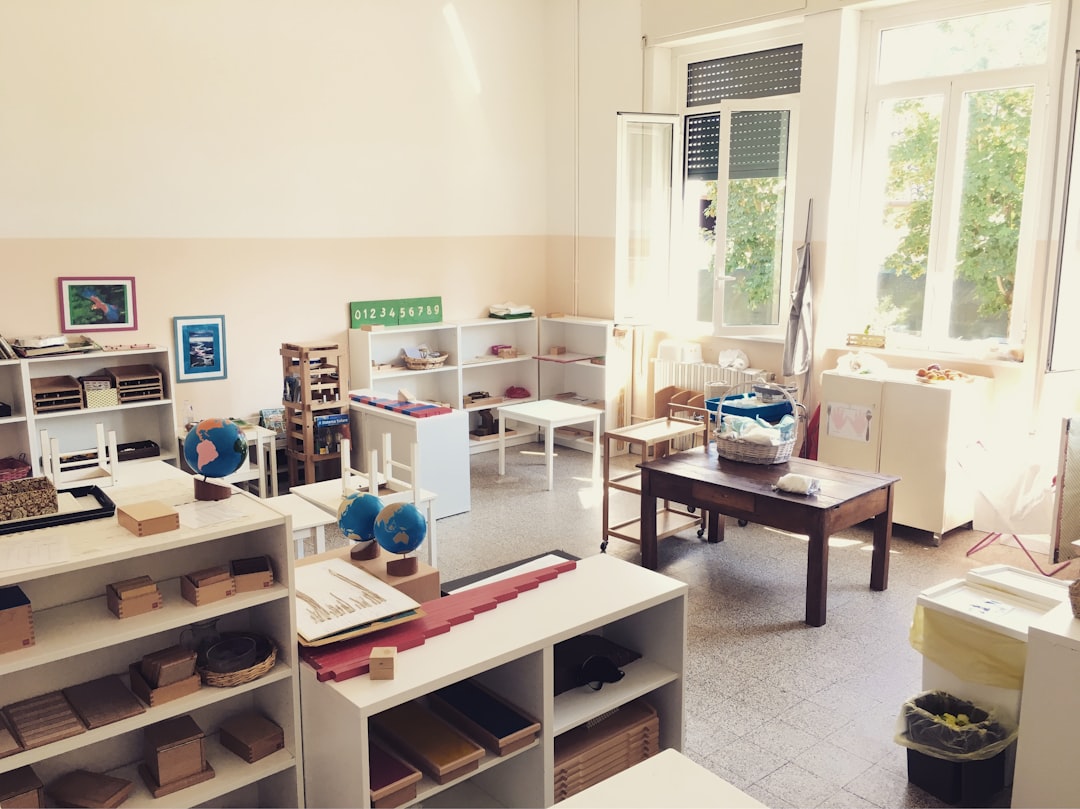
One of the keys of a Montessori nursery is the design of the space. At IMS, the Nido classroom is designed so that little ones can move freely and safely. There are floor mats, open shelves with objects that invite touch, and an outdoor area with natural elements.
Every detail has a purpose. Furniture is made of wood, colors are soft, and lighting is natural. This is no accident: Maria Montessori insisted on the beauty of the environment because children deserve a dignified space. In this sense, a Montessori nursery goes beyond aesthetics: it builds a space that fosters independence. Your child chooses which activity to explore, and that in itself is an educational act.
Why Choose a Montessori Nursery for Your Child?
Book a personalized tour of the school at our website and discover how we work. Meanwhile, here are the concrete benefits that families report:
- Language development in a bilingual Spanish-English environment. At IMS, your little one hears both languages naturally, laying the foundation for future multilingualism.
- Independence and self-esteem: by moving freely, the child learns to trust their ability to solve challenges. Dressing alone, eating, or putting away a material become daily achievements.
- Respectful socialization: the mixed-age group (0-3 years) means older children help younger ones. There is no competition. There is collaboration.
- Stable emotional bond: each guide stays with the same group throughout the entire cycle, creating a secure attachment.
The Association Montessori Internationale (AMI) endorses this approach with decades of research. Families who choose a Montessori nursery notice the difference in their children’s serenity and concentration.
Frequently Asked Questions
At what age can my child start at a Montessori nursery?
At IMS, the Semillas program welcomes babies from 4 months. From around one year or when they start walking, they move to the Infant Community (Nido) classroom. The exact age is assessed during a visit with the family to ensure the child is ready for the environment.
What is the adaptation process like in a Montessori nursery?
We call it the “familiarization period.” For at least one week, a parent accompanies the child in the classroom for gradually longer periods. This way, separation happens without distress. There is no rush: the guide sets the pace based on the child’s response.
Does my child need to be toilet-trained to join the Nido?
No, not at all. In a Montessori nursery, physiological rhythms are respected. Diaper changes become a moment of connection and learning: the guide names what they are doing and allows the child to participate (pulling down pants, choosing the diaper). Toilet learning is approached naturally and without pressure. We observe the child’s signs of readiness and accompany them with respect.
Key Takeaways
Choosing a Montessori nursery means deciding that your child’s early years be wrapped in respect, rhythm, and discovery. At IMS Sotogrande, our Nido classrooms are not just a care space: they are the start of an educational journey that honors each child’s innate curiosity. If you live in the Campo de Gibraltar area, we invite you to book a tour and see firsthand how a prepared environment can transform your child’s everyday life.
Every family deserves to see the difference. The Montessori Nido at IMS is open to children from 4 months, in a bilingual environment with committed AMI guides. Request information at [email protected] and take the first step toward an education that inspires.









